

By Ryusei2025.01.08 Update
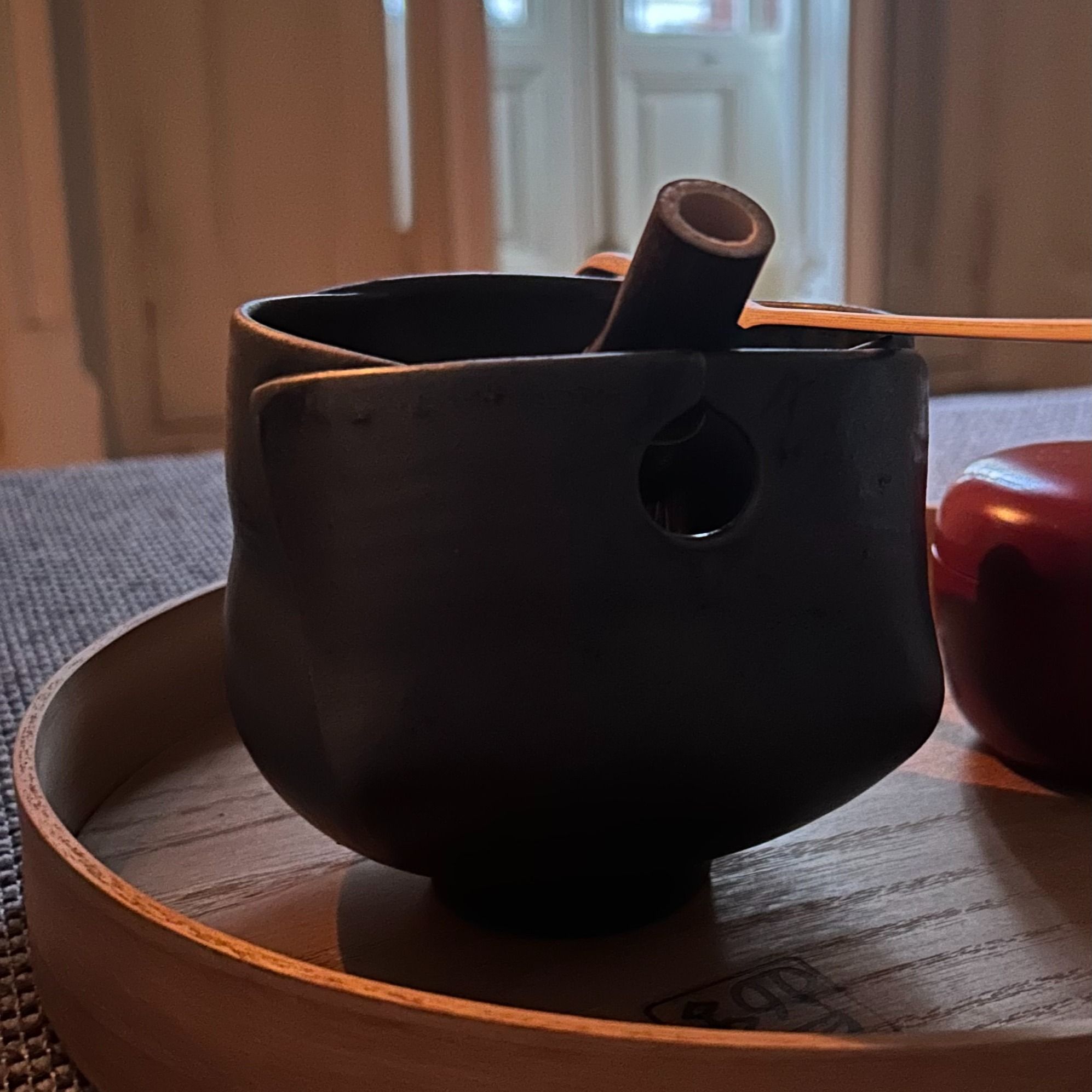
The tea bowl crafted by Kiyomizu Rokubei VII is characterized by its unique holes and modern, chiseled forms, exuding a beauty that combines the rigid and the soft.
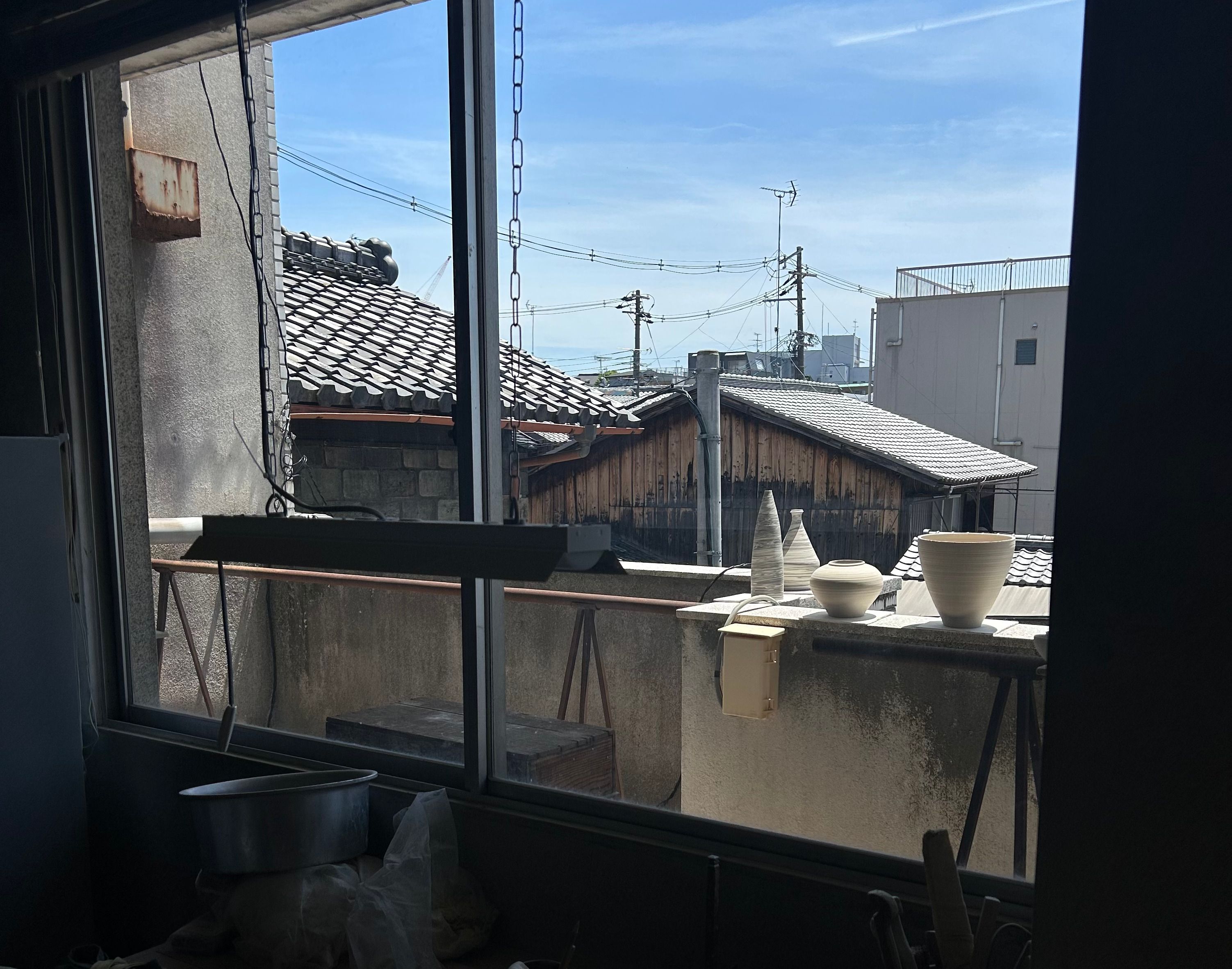
On this occasion, we visited the Kiyomizu Rokubei kiln where the Kiyomizu Rokubei VII artisanship started.
Ceramics produced in Kyoto can be broadly categorized into two types: "Kyoyaki," which spread from the Higashiyama area around the early Edo period, driven by the popularity of tea ceremony, and "Kiyomizuyaki," which was produced in Gojozaka, the approach to Kiyomizu Temple.The Kiyomizu Rokubei kiln is a renowned Kyoyaki kiln with a history spanning over 250 years, established in Kyoto's Gojozaka by the first-generation Kiyomizu Rokubei in the late Edo period (1771). Named after the "kiyosui" seal bestowed upon the first generation by his master, the family has continued to use the "Kiyomizu" surname, and each successive generation has cultivated their own unique style and pursued new forms of expression.
The Kiyomizu Rokubei VII , known as both "Rokubei" and "Kubei," was active in both sculpture and ceramics. Born in Nagoya in 1922, he graduated early from the Department of Architecture at Nagoya Higher Technical School before being drafted and sent to fight in Okinawa. After the war, he studied at Tokyo University of the Arts and, in 1951, became the adopted son of the sixth-generation Kiyomizu Rokubei, a leading figure in Kyoyaki, and embarked on a career in ceramics. However, as his reputation as a ceramicist grew, his interest in objects and their relationship to surrounding space deepened, leading him to exhibit his first sculptural work in 1966. He then adopted the name "Kubei," ceased producing ceramics, and began working primarily as a sculptor using aluminum. His works, which express the affinity between structure, material, and space, have been installed in various locations throughout Japan.
The works of the seventh-generation Rokubei as a ceramicist make use of the properties of clay and the distortions caused by firing, revealing a boldness reminiscent of his sculptural works. Due to his concurrent career as a sculptor, his creations were not confined to a single discipline.
The works of the Kiyomizu Rokubei VII who were active a century ago reveal a respect for both ceramics and sculpture, as well as a freedom to traverse these two realms and break free from established frameworks.

