

By Ryusei2024.12.24 Update
- "There can be no sound without silence, no existence without nothingness. In the quietude of absence, we may again find profound insights with sensitivity."
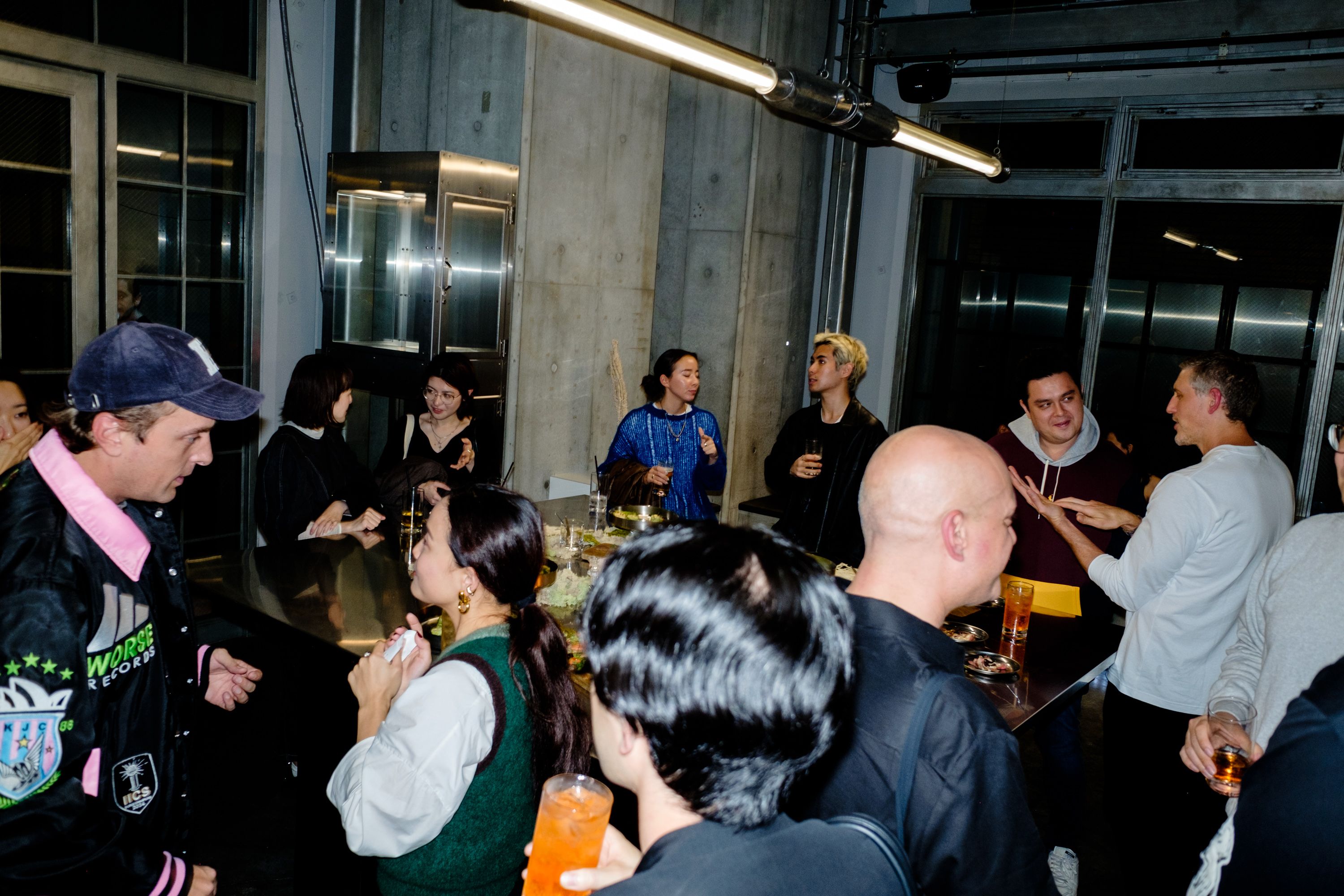
ArtX, in collaboration with ArtReview, hosted a one-night-only exhibition, "Sensescape," at hven in Nakameguro on November 5th. This immersive exhibition explored themes of silence, intervals, and absence through the sound installations and sculptural works of Ray Kunimoto and Miwa Kakuta, creating a space for individuals to engage with their own senses. To further enrich the experience through taste, Thomas Kim, a French chef based in Tokyo, provided a menu inspired by the Mediterranean and Japan.
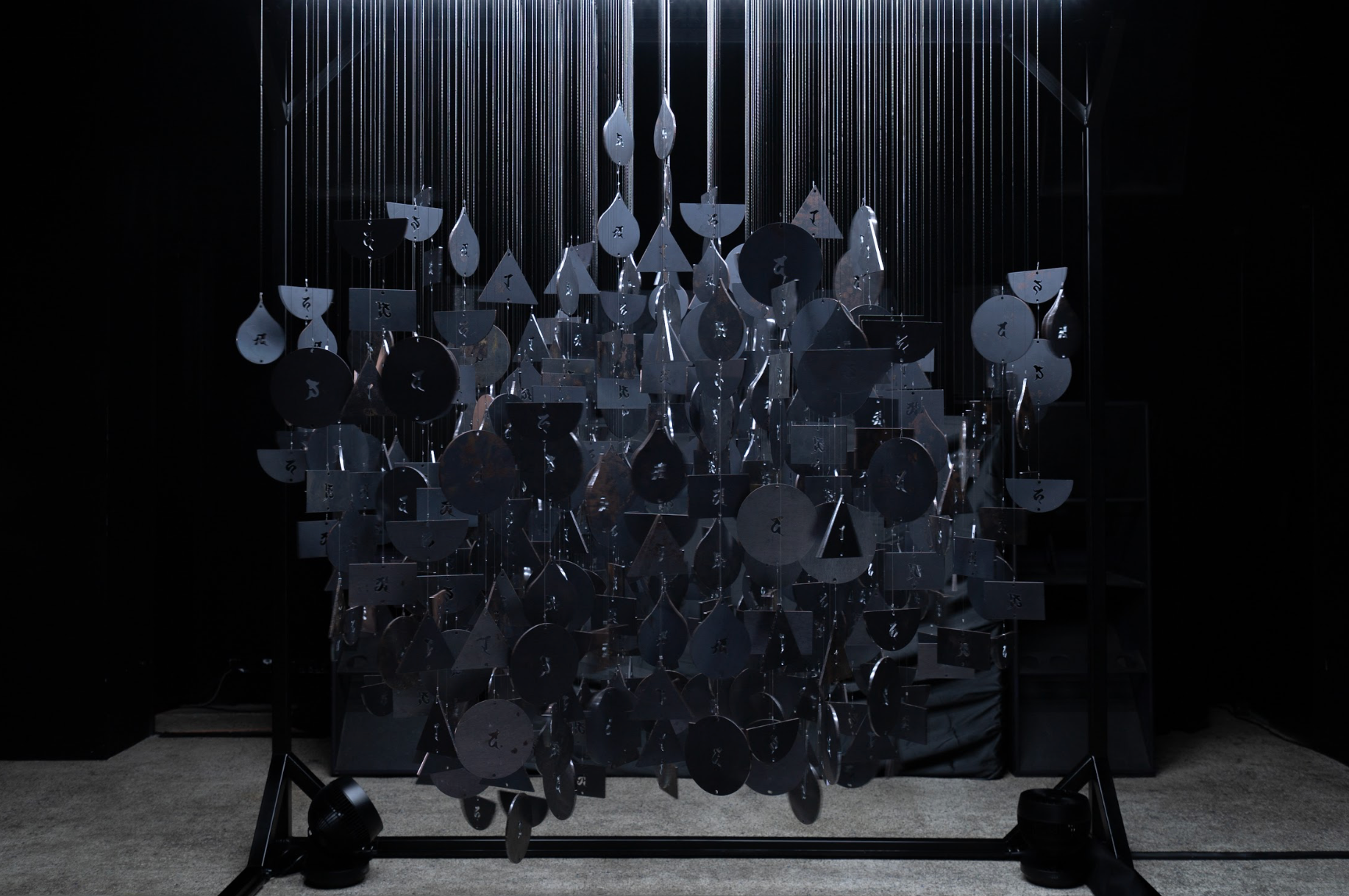
Based on the belief that silence and absence harbor delicate sensations and deep imagination, "Sensescape" curated an experience for viewers to engage with through their senses.
As the main piece of the immersive space, Kunimoto's [KAZE #2-hūm] was exhibited in the venue's black room, originally a club space. A cubic structure measuring 2400mm on each side, with 567 suspended iron plates, resonated with sound, creating the image of a lotus flower as the wind passed through the plates. This sound transcended various boundaries such as time and space, consciousness and unconsciousness, and posed questions about the relationship between nature and humans, as well as the nonlinearity of time, that have been pondered by people since ancient times.
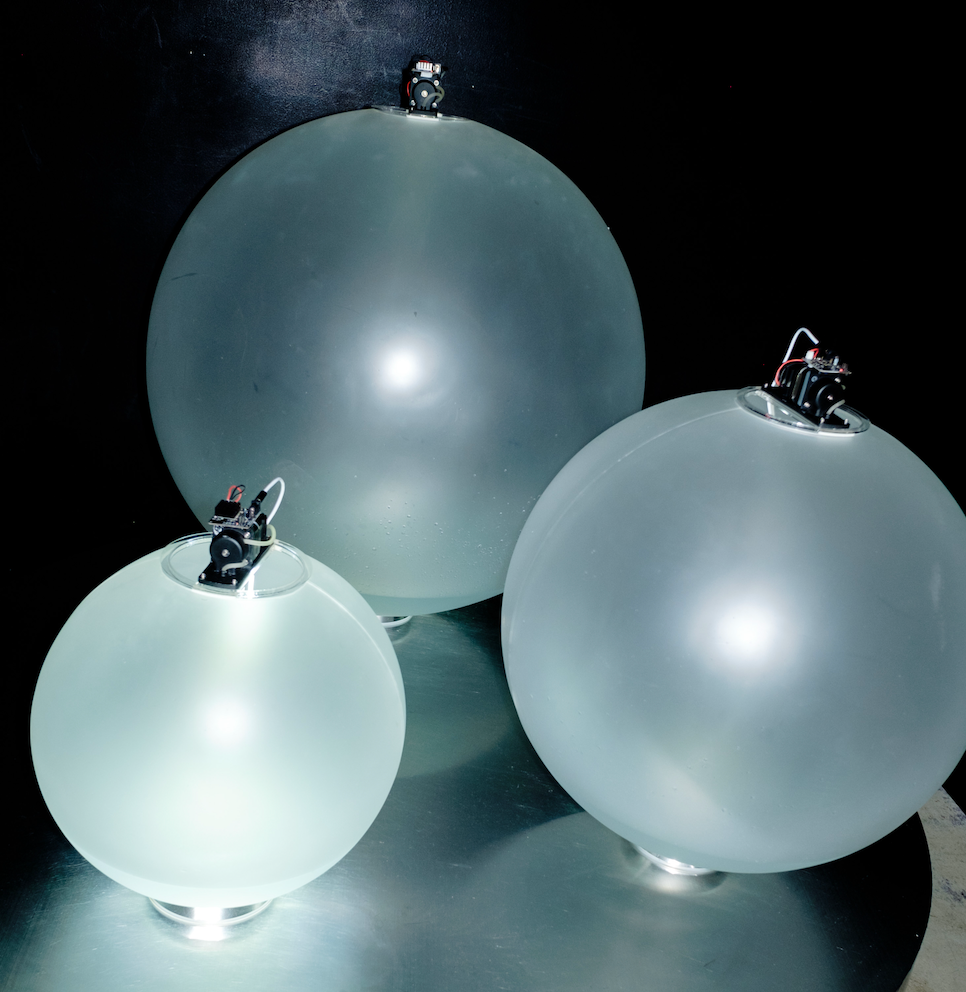
SHIZUKU, which created the sound of water droplets and ripples using LEDs and peristaltic pumps within a hollow acrylic sphere, allowed viewers to rediscover silence in today's noisy society. As water droplets fell into the water-filled sphere and the ripples illuminated by the LEDs floated on the floor and the surface of the sphere, a beautiful sound of water droplets resonated.
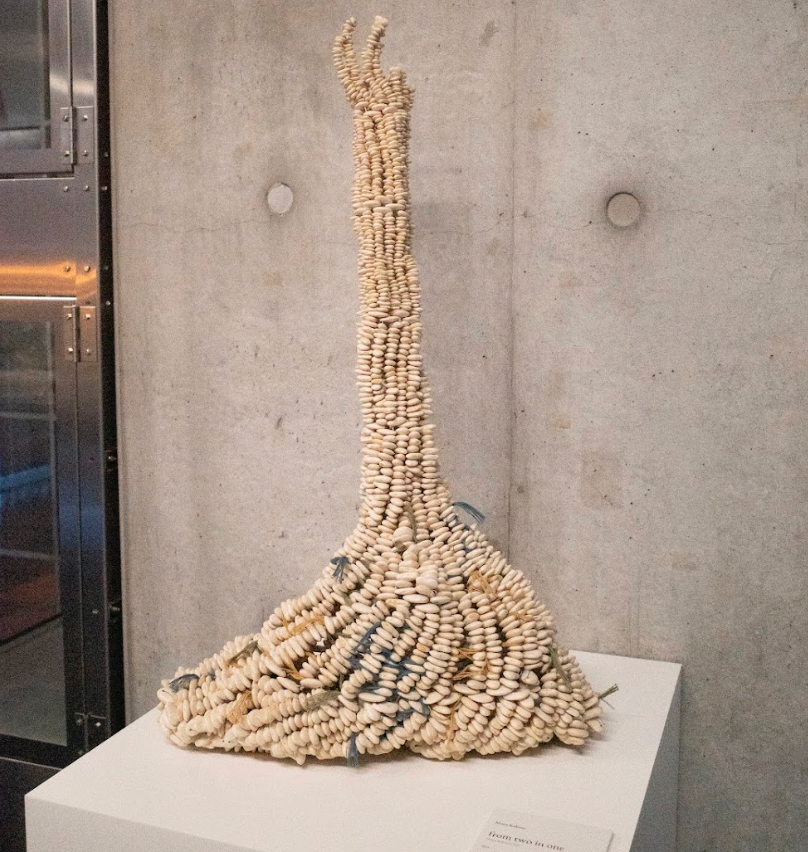
On the other hand, Miwa Kakuta's work blurred the boundaries between presence and absence through the absence of a broom, a common everyday object, creating a "stillness" between the inside and outside. It projected a sense of loss of place and a wavering sense of belonging, giving viewers an introspective impression. By exploring the absence of the broom, once a symbol of ritual, cleanliness, and domestic life, the work reminded us of our identity, sense of belonging, and their cultural interrelations.
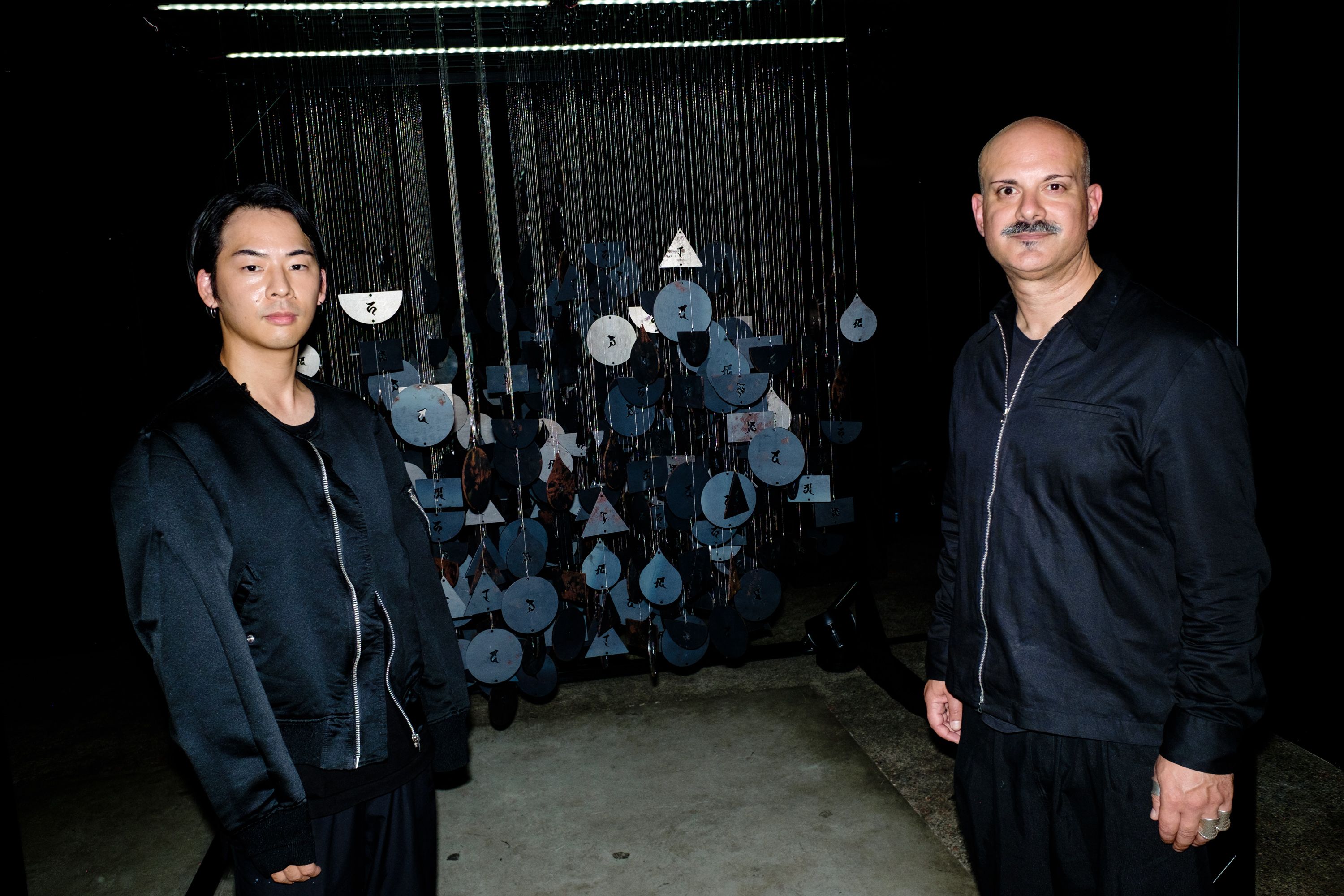
As part of the program, ArtReview editor-in-chief Mark Rappolt held a talk session with Ray Kunimoto.
The conversation took place in a space enveloped by the meditative sounds of [KAZE #2-hūm], where the two exchanged opinions on the symbolism of Kunimoto's work, the interplay between silence and absence, and the creative process.
Kunimoto explained that [KAZE #2-hūm] was inspired by Buddhist mantras and featured a pair of lotus flowers in different states of bloom, symbolizing the breath of life and the concept of wind. The five elements of Buddhism that make up the universe - earth, water, fire, wind, and space - are engraved on each plate suspended in the installation.
Kunimoto also spoke about his approach to combining traditional art with contemporary technology. He views technology as a tool that can be used to express the energy of the interaction between humans and nature, similar to a pencil or brush. His works, centered around sensory experiences, integrate various symbols and technology to create a serene atmosphere.
The conversation with Rappolt provided an opportunity to delve deeper into Kunimoto's creation.
ArtX's activities are centered around three main pillars: "auctions," "magazine," and "programs," aiming to discover universal values through individual sensibilities transcending time and culture. Through its programs, ArtX nurtures new collectors and supports emerging artists. Additionally, we collaborate with environmental protection organizations through exhibitions and other initiatives, connecting art and society. A portion of the proceeds from the inaugural auction, "The Perennial Curation," was donated to coral reef conservation efforts in Okinawa, and these efforts have begun to bear fruit on the ground.
The one-night-only exhibition "Sensescape" was one such program, and it attracted a diverse audience including collectors, artists, and curators, reflecting ArtX's cross-cutting activities.
Artists
Ray Kunimoto
Born in New York in 1991 and raised in Tokyo. Active in New York since 2017 and in Tokyo since 2021, he graduated from Keio University with a major in aesthetics and art history. Using a unique three-dimensional sound system, he creates installa- tions that connect the behaviors of participants to the space. He merges traditional Japanese aesthetics with contemporary technology, presenting works themed around "silence."
Ray Kunimoto
Born in New York in 1991 and raised in Tokyo. Active in New York since 2017 and in Tokyo since 2021, he graduated from Keio University with a major in aesthetics and art history. Using a unique three-dimensional sound system, he creates installa- tions that connect the behaviors of participants to the space. He merges traditional Japanese aesthetics with contemporary technology, presenting works themed around "silence."
Miwa Kakuta
Raised in New York, Miwa studied textiles before pursuing a Master's degree in Jewelry & Metal at the Royal College of Art in London. Currently based in London, she creates installations, sculptures, and experimental jewelry, often employing organic materials. Her work explores the interplay between presence and absence, the visible and the invisible, inviting us to appreciate the beauty and complexity of the human experience. Drawing on the Japanese concept of "ma," or the art of space, Miwa delves into the nuances of existence and non-existence, challenging our perceptions of reality.

