

By Ryusei2025.04.01 Update
In "Works and Spaces Vol. 1," we explored the differences between exhibiting in white cubes and public spaces like temples and historical buildings. White cubes, established at the Museum of Modern Art (MoMA) in New York in the early 20th century, have become a prime example of exhibition spaces designed to allow viewers to focus on the artwork itself. On the other hand, public spaces such as temples and historical buildings possess their own historical and cultural contexts, fostering interactions and dialogues between the artwork and the space. While Vol. 1 delved into the historical background of works and spaces, this Vol. 2 features a dialogue with artist Ray Kunimoto, discussing the interplay between works and spaces, as well as Kunimoto's own artistic creations.
ArtX: you've previously exhibited at Sennyū-ji Temple. Do you perceive a difference between exhibiting in a white cube and a temple?
Kunimoto: Absolutely. The difference lies in the cultural connotations between white cubes and public spaces like temples. White cubes are designed to minimize extraneous information, allowing for a focused experience on the artwork.
ArtX: Almost like a laboratory, right?
Kunimoto: Particularly in contemporary art, if I may put it positively, there's an increased "purity," with conceptual art and various other genres becoming more condensed. Negatively speaking, it sometimes feels inaccessible, like it's only for enthusiasts. White cubes provide a space where those who already appreciate art can find something to enjoy, ensuring a venue for high-purity art.
It's akin to Comic Market at Makuhari Messe. The space itself is densely packed. I love both white cubes and public spaces, but they serve different purposes. White cubes are about pursuing the essence of art, while public spaces explore how art connects with people's lives and more neutral, everyday experiences. Regional art festivals, like those in Ishinomaki City focusing on recovery, exemplify this. They seek to find, learn, and express the crossover between people's lives, real-world events, and art, making it more accessible.
Of course, temples are public spaces. Historically, they've served not only as religious sites but also for funerals and education, deeply rooted in people's lives. The distinction between public spaces, including temples, and white cubes lies there.
ArtX: Would you say the relationship between your works and the exhibition space is significant to you?
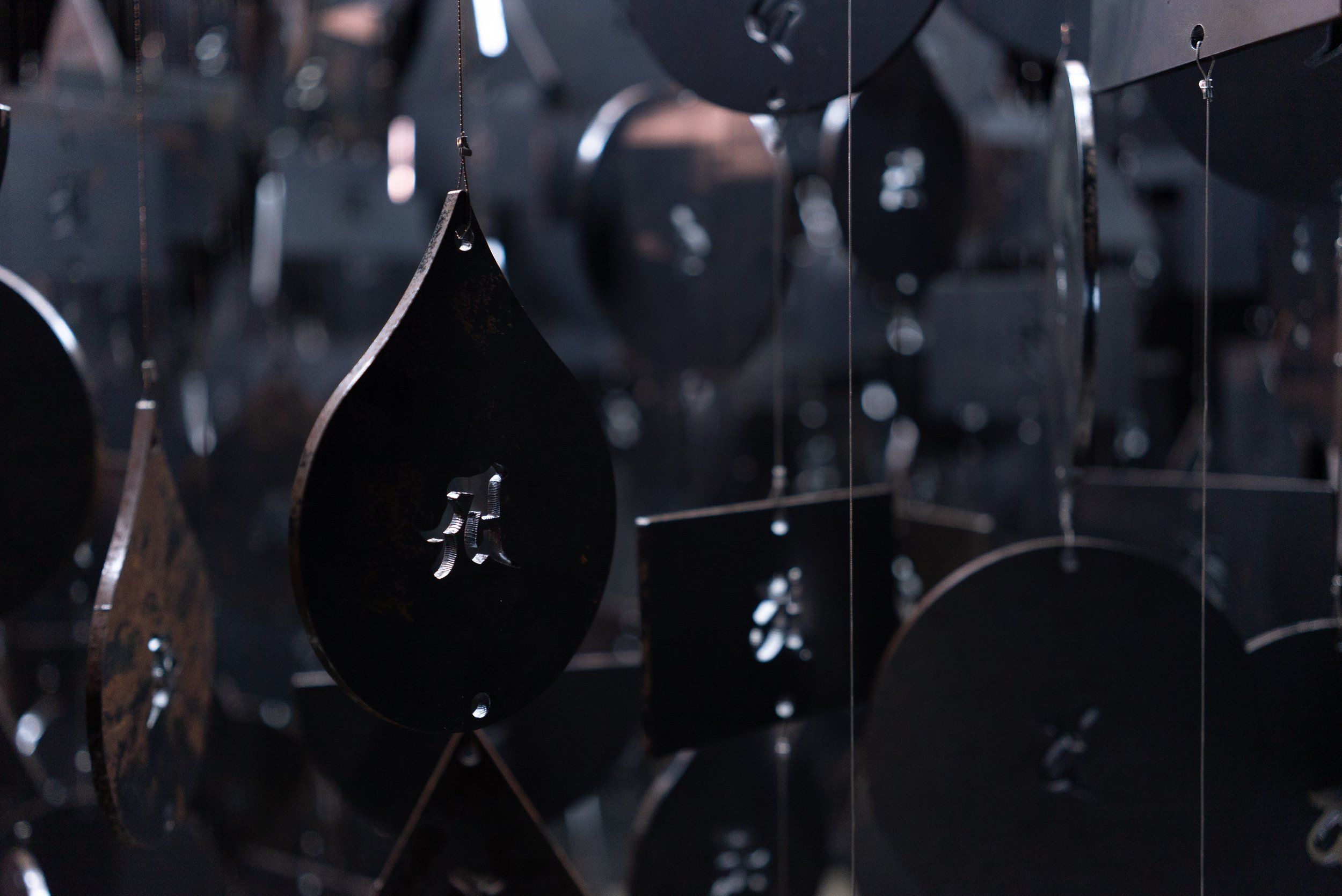
Kunimoto: It's crucial. My works often involve sound, which naturally leads to installations. Installations inherently link the space and the viewer, making it unavoidable in my creative process.
ArtX: Do you often create with the specific space in mind?
Kunimoto: Yes, I do. Adjustments are always necessary, such as lighting intensity, air circulation, and sound levels for speaker-based works. However, it's equally important that the work can stand alone.
ArtX: At our "Sensescape" last year, we featured your installation using sound and wind, which allowed us to personally experience the freshness and depth of works that engage the senses. Your work, in particular, left a strong impression in the realm of contemporary art.
Kunimoto: I believe contemporary art can be broadly divided into two categories: conceptual works that function in a discursive space, and craft-oriented works. The latter explores fine textures and pursues sensory beauty through the five senses. Conceptual art, on the other hand, exists in a completely different realm, akin to an extension of philosophy. It's like translating philosophical concepts that defy verbal expression into other media.
These are distinct genres, as different as jazz and hard rock in music. I enjoy and appreciate both.
ArtX: What aspects of Japanese aesthetics appeal to you, and what sparked your interest?
Kunimoto: Before I became interested, particularly before I started creating art, I think I held a globalized worldview, focusing on quantitative analysis and rational logic. However, encountering Japanese culture made me realize the existence of things that defy numerical or linguistic expression. For example, the serene gestures of a tea master in a quiet tea room evoke emotions that aren't about decibel levels or golden ratios. Through such experiences, I realized I had been viewing the world through a limited window. Discovering the multitude of perspectives ignited my curiosity to explore "other windows." While this applies to various cultures and languages, I want to leverage the gift of living in Japan and speaking Japanese, including embracing what I didn't choose. I aim to deepen my understanding of Japanese culture and express it through my work.

