

By Ryusei2025.04.28 Update
For the series dialogue: roots and fruits, ArtX delves into the minds of established and emerging collectors from Japan and abroad. Through intimate conversations, we uncover the roots that led them to collect artworks—their personal thoughts, experiences, and philosophies—as well as the collections to which these passions have borne fruit.
Just as a fruit grows only after the plant’s roots are firmly established and its branches and leaves have matured, a variety of memories, events, and philosophies should lie at the root of any collection. By illuminating these inner workings, ArtX seeks to highlight the unique character of each collector.
In our third interview in "dialogue: roots and fruits," we spoke with Victorino Rosón Díez-Feijóo, a young Spanish collector. Victorino grew up surrounded by artists and artworks as the son of Victorino Rosón Ferreiro, a prominent Spanish collector. Following his father's passing, he began to seriously engage with the art collection and now undertakes a wide range of activities, including managing the collection, organizing artist residencies, exhibiting works in offices, and collaborating with young artists.This time, we spoke with this young, forward-thinking collector about his activities before becoming involved in the collection and his future aspirations.
ArtX: Thank you for this interview opportunity. First, could you tell us about your background, Victorino? And since your father was a collector, you must have been exposed to art from a young age. What were your impressions of your father's collection before you became involved with art yourself?
Victorino: I was born and raised in Spain, and after spending two years at a boarding school in England during my student years, I studied at the University of Navarra in Spain. There, I majored in law and business. I also did an internship at an investment bank, and I realized that it was something I enjoyed. After that, I worked in investment banking for eight years, and then, after the pandemic, I started managing my own business. And since my father passed away in 2016, I have also taken over his business.
Regarding our collection, although I love art now, I haven't really thought about how I felt about my father's collection when I was a child. But when I was a teenager, my father's collection was mostly conceptual and minimalist art, so I didn't like them so much. I saw new works at home many times, but I wasn't particularly fond of them. I often used to say to my father, "Why not El Greco or Velázquez?" Of course, I didn't know anything about prices back then. These kinds of artists were completely out of reach.
ArtX: I see. But do you like that kind of conceptual art now?
Victorino: I do collect conceptual works, but it's not exclusively that.
Victorino and his sisters, Caterina and Maria, established the Aldebaran Collection in 2020 to honor their father's legacy as a collector. The collection operates on two pillars: preserving their father's collection and supporting emerging artists. As part of the second pillar, they have initiated an art residency in Ecuador to support local artists and promote cultural exchange, as well as the Roamer Project, which exhibits the works of emerging artists in unique locations. This demonstrates that the siblings are not only preserving their father's legacy through the collection but also undertaking new initiatives.
ArtX: Could you tell us a bit more about the Aldebaran Collection?
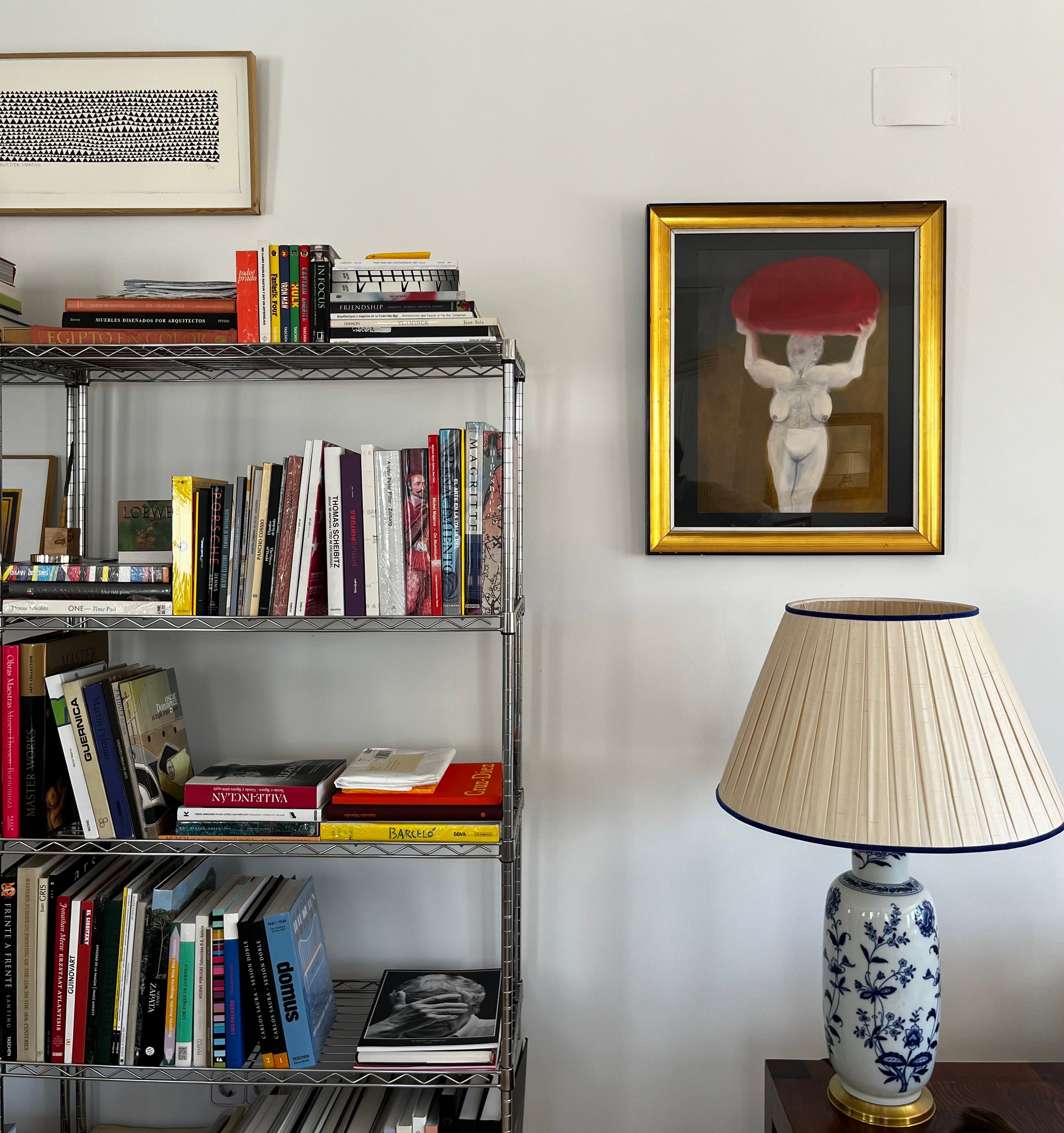
Victorino: The Aldebaran Collection is a project that was created during the pandemic in 2020. My sisters, Caterina and Maria, and I decided to launch this project to keep the figure of our father as a "collector" alive. With that in mind, we decided to think about two pillars. The first pillar is to keep my father's collection alive and keep it through initiatives like lending works to companies and also to collect works that are related to my father's taste. And the second pillar is what my siblings and I are currently doing.
The new initiatives that my siblings and I have started mainly involve two things: having an artist residency in Ecuador to reach out to local artists and also inviting artists from all over the world to Ecuador to learn about its culture and people. And then, the newly launched Roamer Project. Through these activities, we continue to collect and support young artists with whom we can continue to grow together.
ArtX: Thank you for the detailed explanation. The Roamer Project – it sounds like unique exhibition project, doesn't it? It's a lovely name.
Victorino: The purpose of the Roamer Project is to introduce artists who haven't been exhibited in Spain before, so it's an international project. For example, in the first edition, we presented a total of 13 artists, 12 of whom were from overseas. This first edition took place in an old castle located 200 kilometers from Madrid. We were able to create some quite interesting exhibitions inside the castle and on the ramparts. After the exhibition at the castle, we held three exhibitions at the offices of a British law firm in Madrid.
ArtX: It's wonderful that you can contribute to the artists' visibility in places where their work might not be known.
Victorino: But on the other hand, all the funds raised through this project are donated to non-profit organizations. So, I think it's an interesting project in that sense.
ArtX: Next question. You grew up with your father's collection, but now you're working on projects with artists. Has interacting with artists actually changed your impression of the collection?
Victorino: For example, when I think about the artists in my father's collection now, most of them are artists from his generation. So, inevitably, they feel a bit distant to us now. This is because many of them are now either masters or have passed away. But for me, one of the great things about collecting is the interaction with the artists themselves. Hearing about their works directly from the artists is a very refreshing experience, and it makes the collected works seem more alive.
ArtX: That's right, it's a big thing to be able to learn more about the artists.
Victorino: When I was a child at my father's house, I had lunch with many famous artists. They were very famous artists, people who had received many awards and belonged to very important art galleries. There were some I don't even remember who they were, and some of those people have passed away, so now I can't even ask who they were. But, for example, I remember having lunch with José Dávila and others many times at my father's house.
ArtX: Some collectors like you want to interact with artists to learn more deeply about art. In that sense, I feel there are various types of collectors. However, while some collectors want to actively interact with artists, others prefer not to meet the artists they collect because they feel it might change their impression of the work.
Victorino: Indeed, there are two groups, and that's what makes it interesting. Actually, among the artists we selected for the Roamer Project, there was one artist from Japan. He came to my house and we had dinner together. He wasn't very good at English, but before we knew it, we understood each other. I remember that before meeting him, I didn't really like his paintings, but after that dinner, I started to like them.
ArtX: Did your father also interact with artists or do activities like artist residencies?
Victorino: Not to that extent. My father was a collector and focused on collecting works, and in that sense, he was a very serious collector. He seemed to keep in touch with some of the artists, but as I said earlier, they are now very established figures, so in that respect, it was a very closed atmosphere. Of course, I think my father wanted to know about the artists, but he wasn't the type to interact widely with everyone.
ArtX: Are there any works in your collection that particularly stand out to you, or that you find unique?
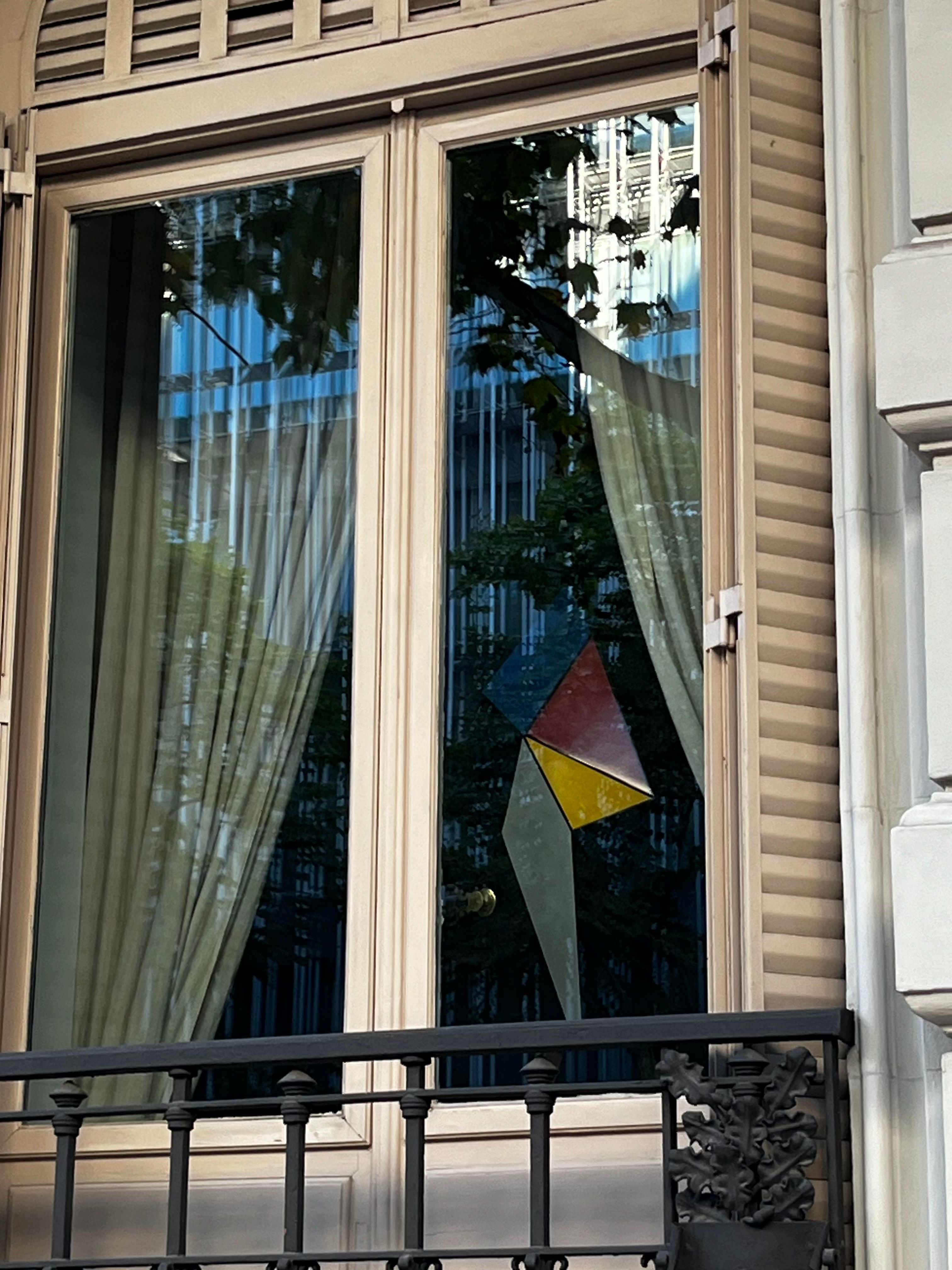
Victorino: I would probably say Lawrence Weiner. My father collected two of his works many years ago, 15-20 years ago. At the time, I didn't really understand them, but I always felt something about them. And in the last two or three years, I've come to enjoy conceptual art. What's interesting is that I myself ended up collecting a work by Lawrence Weiner that was already in my father's collection. So, it's like father and son both fell in love with Lawrence Weiner's work.
ArtX: That's a nice coincidence.
Victorino: But I don't really consider myself a purely conceptual art lover.
ArtX: So, your taste is a bit different from your father's?
Victorino: Of course, it is. But people's thoughts and feelings change over the years. Certainly, I now love art with strong colors that lies somewhere between abstract and figurative. But I would love to ask my father what he thinks about this kind of art. However, I feel that art lovers and art collectors should not focus only on specific types of art. So, I'm not even sure what kind of art I like the most, but I want to accept it as something that is constantly evolving and continue to collect without being too fixed in my tastes.
ArtX: I think there are various types of collectors, but even among them, you give different impression. You are pioneering new fields and starting new initiatives like the Roamer Project and artist residencies. For example, what is your vision for the future of the Aldebaran Collection in, say, ten years?
Victorino: That's a good question. No one knows, but thinking about ten years from now, I hope our art residency will become one of the major residencies in Latin America, if not the world, while involving local artists. Regarding the collection as a whole, I hope that in about 15 years, we will have a space to exhibit the collection and share it with everyone.
ArtX: I see, so under the name of the Aldebaran Collection, you are trying to do various things with a broad approach. Why did you decide to start an artist residency? Because an artist residency seems like a very committed and dedicated undertaking.
Victorino: Firstly, the reason why I wanted to create such an art residency is because when I talk to people who run residencies, I feel that it's the closest way to engage with art and artists. Also, the reason for choosing Ecuador is that I personally wanted to do something related to sustainability and climate change. When I visited for the first time, I fell in love with the country.
ArtX: Do you also have plans to have your own museum in the future?
Victorino: That feels a bit pretentious for me right now. But I would be happy to have a space where we could exhibit or hold workshops. It doesn't seem likely to happen immediately. However, I feel that not having a dedicated space allows for more flexible activities. That's why, when I went to the warehouse where we store the collection for management purposes, I saw many paintings, sculptures, and installations just sitting there unseen, and it made me think. And that's when I came up with the idea of lending the collection's works to offices and other spaces. After all, it's gratifying to know that many people can see works that were just sleeping.
ArtX: What do you think your father would think of your current activities?
Victorino: I think he would be happy. We are taking out works that were sleeping in the warehouse and exhibiting them so that people can see them, and I think that's like giving the works a new life. Another thing I would say is that there are three siblings, and if my father had been asked before his death who among us would take over the collection, I definitely don't think my name would have come up. Our project is also a way for the three siblings to unite, and that's why I feel that the three of us walking the same path like this is the best legacy. I'm sure my father is happy.
ArtX: What you have been doing feels like a dialogue with his father through the collection in a way. I think it's a very wonderful initiative. Thank you very much for the interview today.
Although Victorino grew up alongside these works from a young age, it seems he didn't harbor a particularly strong interest in them at the time. However, his father's passing left a great collection to him and his siblings. He chose to expand this inherited collection in a way that differed from his father's approach. The Aldebaran Collection began a new path, engaging more broadly with the world. Rather than simply preserving this great collection, his stance of actively contributing to the art ecosystem through initiatives such as artist residencies and exhibitions is very powerful, and he is a collector whose future activities are highly anticipated.
His words - "I feel that the three of us walking the same path like this is the best legacy." - were more impressive than anything else. This great collection did not come to an end with his father's death; instead, a new chapter was opened by Victorino.

