

By H.Y2026.05.19 Update
— From Home Storage to Professional Facilities
As a collection grows from one piece to many, most collectors find themselves asking the same questions. Is it okay to keep displaying them like this? Could they be deteriorating without my knowing? The more deeply you care about your art, the more those questions tend to weigh on you.
But managing a collection doesn't have to mean doing everything perfectly. What matters is knowing where to begin. This guide outlines the essentials of collection care — and the order in which to tackle them.
First, Know Your Enemy: The Three Threats to Your Artwork
There are many ways art can be damaged, but in a home environment, three factors deserve your closest attention.
Light (UV radiation) is the most silent and most certain source of harm. According to Panasonic's lighting technical data, as much as 95% of light-related damage to artworks comes from ultraviolet rays. UV isn't limited to direct sunlight — fluorescent bulbs indoors emit it too. The result: faded colors, yellowed paper.
Fluctuations in humidity cause mold growth, canvas warping, and flaking paint. A conservator at the Whitney Museum of American Art has noted that sudden swings in humidity are particularly damaging: "The canvas expands and contracts, but the paint layer is fixed — which leads to flaking." While 50–60% relative humidity is the standard maintained by most museums, the real priority is consistency. It's the sudden shifts that do the damage.
Sudden changes in temperature cause materials to expand and contract. One easily overlooked culprit: air conditioning vents. Walls directly in the path of an AC unit experience frequent temperature swings, making them poor locations for hanging or storing artwork. As with humidity, around 20°C is the museum standard — but avoiding sharp fluctuations matters more than hitting a precise number.
Priority 1: Rethink How You Display Your Work
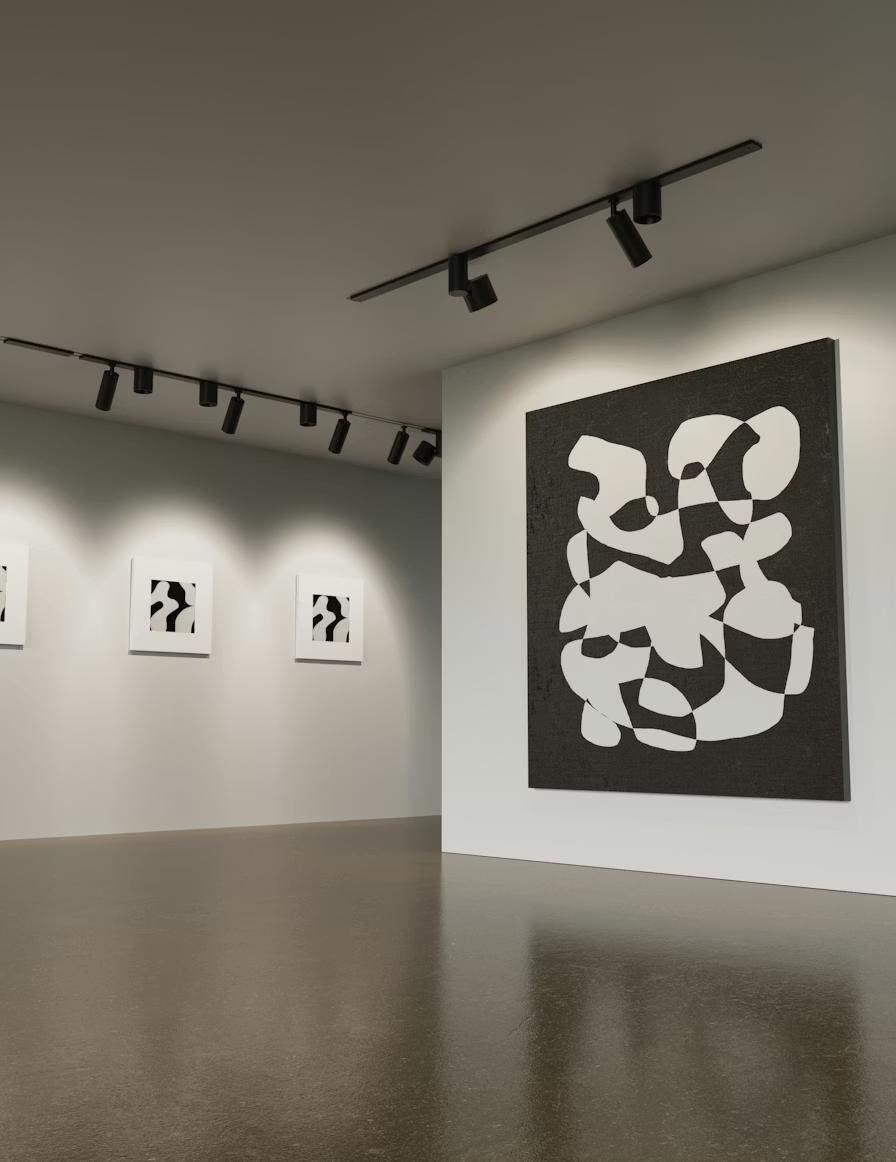
Improving how you care for your collection doesn't require expensive equipment or major renovations. Adjusting how and where you display your work can reduce the majority of risks.
Start with placement. Three locations to avoid: walls that receive direct sunlight, spots directly in front of air conditioning vents, and areas near water sources where humidity tends to rise. Steering clear of these alone can significantly reduce the stress on your works.
Switch to LED lighting. According to research from multiple lighting manufacturers, LEDs emit approximately 1/200th the UV radiation of fluorescent bulbs. Simply changing your light source can reduce everyday UV exposure to near zero.
Consider upgrading your framing. Many collectors continue to display works in the frames they came with at purchase — but according to framing specialists, switching to UV-filtering acrylic glazing can raise UV protection to 97–99%. The cost typically ranges from a few thousand to tens of thousands of yen, and for collectors of works on paper, prints, or photographs, it's one of the first upgrades worth making.
When storing multiple works together, always place a protective sheet between each piece. Canvases should be stored upright — stacking them horizontally risks deforming the surface under the weight.
Priority 2: Build a Habit of Record-Keeping
It may seem unglamorous, but over the long term, documentation is one of the most important things a collector can do.
At minimum, keep a record of the following for each work:
- Date of purchase, seller, and purchase price
- Dimensions, medium, and year of creation
- Whether a certificate of authenticity or guarantee exists, and where it's stored
- A photograph documenting the work's condition at the time of purchase
This practice — known as a condition report — is something the art world's leading media outlet, Artsy, emphasizes repeatedly in its reporting on collection care. If damage or deterioration occurs, having a record of the work's original condition makes it far easier to identify the cause and make informed decisions about restoration.
There are three situations where documentation becomes especially important:
When insuring your collection — Under Tokyo Marine & Nichido's home contents coverage, artworks valued above ¥300,000 are classified as "high-value items" and automatically covered up to ¥1,000,000 per incident, provided you have contents insurance in place. For works that exceed this threshold, you'll need to add an endorsement to increase the coverage limit. For higher-value pieces, a standalone fine art policy (動産総合保険) may be worth considering — and having the original receipt or a certificate of appraisal will make establishing the work's value much smoother. Note that most fine art policies exclude gradual deterioration such as fading or mold. Confirm the details with your insurer.
When selling — A documented provenance and condition history supports a fair, well-substantiated sale price.
For estate purposes — Artworks are considered part of an estate and may be subject to inheritance tax. Without documentation, it becomes difficult for family members to understand what they've inherited — or what it's worth.
For digital record-keeping, TERRADA ART STORAGE (by Terada Warehouse) offers a free collection management tool that lets you register works, manage information in one place, and generate visual summaries of your collection. You don't need to use their storage facilities to use the tool. If you do choose to store works with them, their per-piece storage plan starts at ¥440 per month.
Priority 3: Decide Between Home Storage and Professional Facilities
As a collection grows, home storage can start to show its limits. Here are some indicators that it may be time to consider a specialist facility.
Consider offsite storage when:
- A work was purchased at a significant price point (as a rough guide, above ¥1,000,000)
- The work is made of fragile materials — works on paper, prints, photographs, or textiles
- The work incorporates plastics or mixed media common in contemporary art (certain materials require careful control of what they come into contact with)
- Your home environment is difficult to regulate — poor humidity control, too much natural light
- Your collection has grown to more than ten pieces
The principle Artsy's experts return to again and again is this: consistency is the key. Maintaining a perfect number matters less than preventing sudden swings in temperature and humidity. If your home environment makes that difficult, a professional facility becomes a practical answer.
What to look for in a specialist facility:
Evaluate climate control capabilities, security, staff expertise, and ease of access. In Japan, TERRADA ART STORAGE is the most established option, maintaining conditions of 20°C and 50% relative humidity, with the ability to store individual works. You don't need to commit your entire collection — storing only the most delicate pieces while keeping others at home is a perfectly reasonable approach.
As multiple specialists interviewed by Artsy have put it: proper storage means your collection can continue to grow in value without the cost of restoration or conservation work. The expense of professional storage is, in this sense, an investment in the collection itself.
By Material: The Single Most Important Thing to Know
Medium
Primary Risk
First Step
Oil on canvas
Flaking paint from sudden temperature/humidity shifts
Move away from AC vents; store upright
Prints, photographs, works on paper
Fading and yellowing from UV exposure and humidity
Reframe with UV-filtering acrylic glazing
Japanese painting, washi
Moisture damage and insects
Store in paulownia (kiri) boxes; ensure regular air circulation
Contemporary art (mixed media)
Material-specific deterioration (e.g., degrading plastics)
Ask the gallery or artist for specific storage guidance
For works incorporating mixed or synthetic materials, standard conservation guidelines may not apply. The experts Artsy consulted agreed: consulting the gallery you purchased from is the single best first step — and the most reliable.
In Closing
There is no need to get everything right at once. Start with two things: limit the light that reaches your works, and begin keeping records. Those two habits alone will meaningfully reduce the risks facing most collections.
Your relationship with a work begins on the day you bring it home. Caring for it, day by day, is how that relationship lasts. The more your collection grows, the more those quiet habits become the thing that protects both the works and their stories.

