
ArtFair through "installations" - ArtBasel 2024
FeaturesBy Ryusei2024.06.20 Update
Art Basel, held again this year in Basel, Switzerland, is the biggest event in the art world, bringing together collectors, curators, and galleries from all over the world. We pick up some of the artists of note from the world's largest art festival.
Art fairs are held all over the world throughout the year and can be said to reflect the market of the time. The work presented here is a large-scale installation work that was exhibited in the sector called Unlimited. It is a presentation of large-scale works, all of which are for sale. This is a sector that is only possible at ArtBasel, which is visited by many curators and museum professionals. This year's Unlimited sector featured widely known artists such as Yayoi Kusama, Carl Andre, and Keith Haring, as well as artists with unique backgrounds. In this issue, we would like to introduce some of the "artists with unique backgrounds" exhibited at Unlimited.
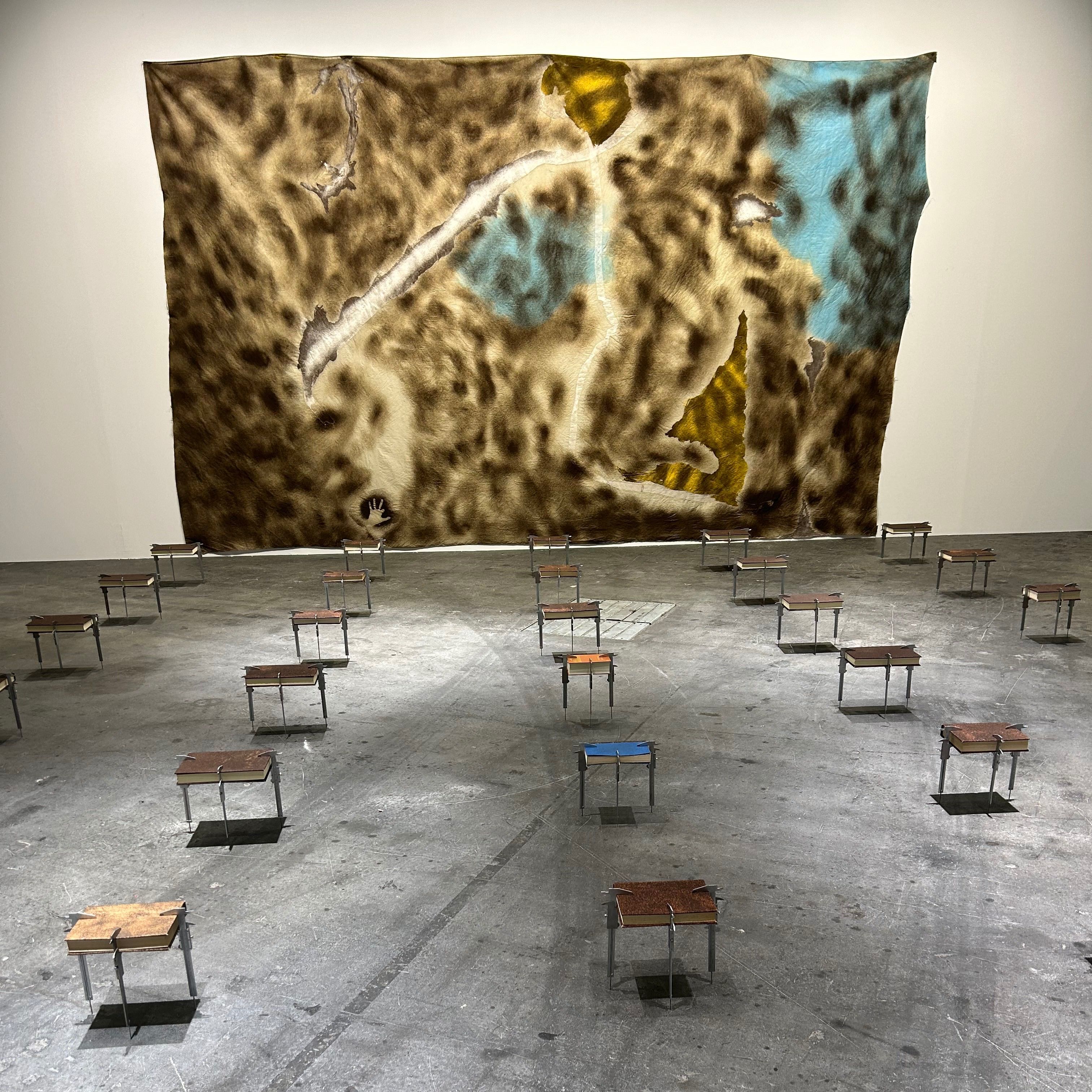
In Francis Offerman's "Untitled," a rumpled cloth coated in coffee grounds is spread over that sea of books. The installation consists of his mother's Bible, which she used throughout her life, early 20th-century French textbooks, a universal encyclopedia, and records of European travelers in Africa during the 19th century. Each book is supported by instruments once used by Belgian colonizers to measure and identify the facial features of Rwandans for racial classification. Offerman juxtaposes this violence with the pleasure of drinking coffee, a characteristic culture of his homeland. The work is therefore a dialogue and self-reconciliation with one's own cultural background and a connection to the collective history by deepening personal experience.
Francis Offman (b. 1987, Butare, Rwanda) creates wall works and installations from repurposed materials such as gifted and discarded fabrics, used coffee grounds, expired bandages, and paper scraps. She has lived in Italy since her childhood. Currently resides in Bologna.
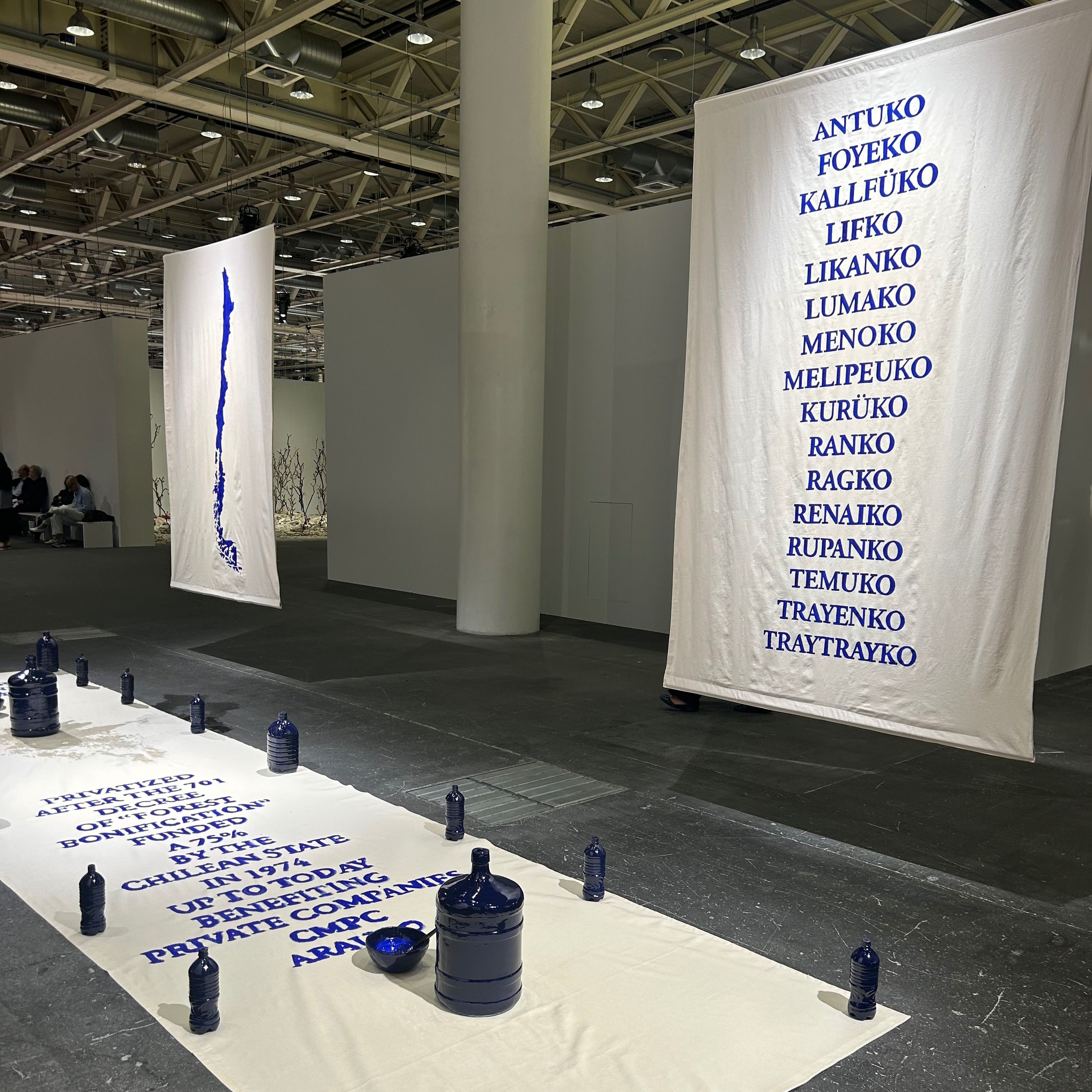
This work by Seba Calfuqueo unravels the historical ties between water and the Mapuche people in the context of the neoliberal and privatization that has engulfed Chile, as well as the poetic and political through themes of water, the body, territory, and the Mapuche language. The installation is composed of a variety of elements, from a Mapudungun water toponymy to excerpts from Chile's water law, which symbolizes the commodification of water, and pottery in the form of water containers, which signify "drought," "plunder," and "1981," respectively. The performance featured an artist who painted the Gnuelve, a symbol of Mapuche resistance, on the face.The work even evokes a sacred atmosphere through the representation of actual angry events and historical elements related to them in a seemingly ritualistic arrangement.
Seba Calfuqueo (b. 1991, Santiago de Chile) is a Mapuche artist whose work uses their cultural heritage as a starting point to encourage critical reflection on the status of Mapuche subjects in contemporary Chilean society. He lives and works in Santiago de Chile.
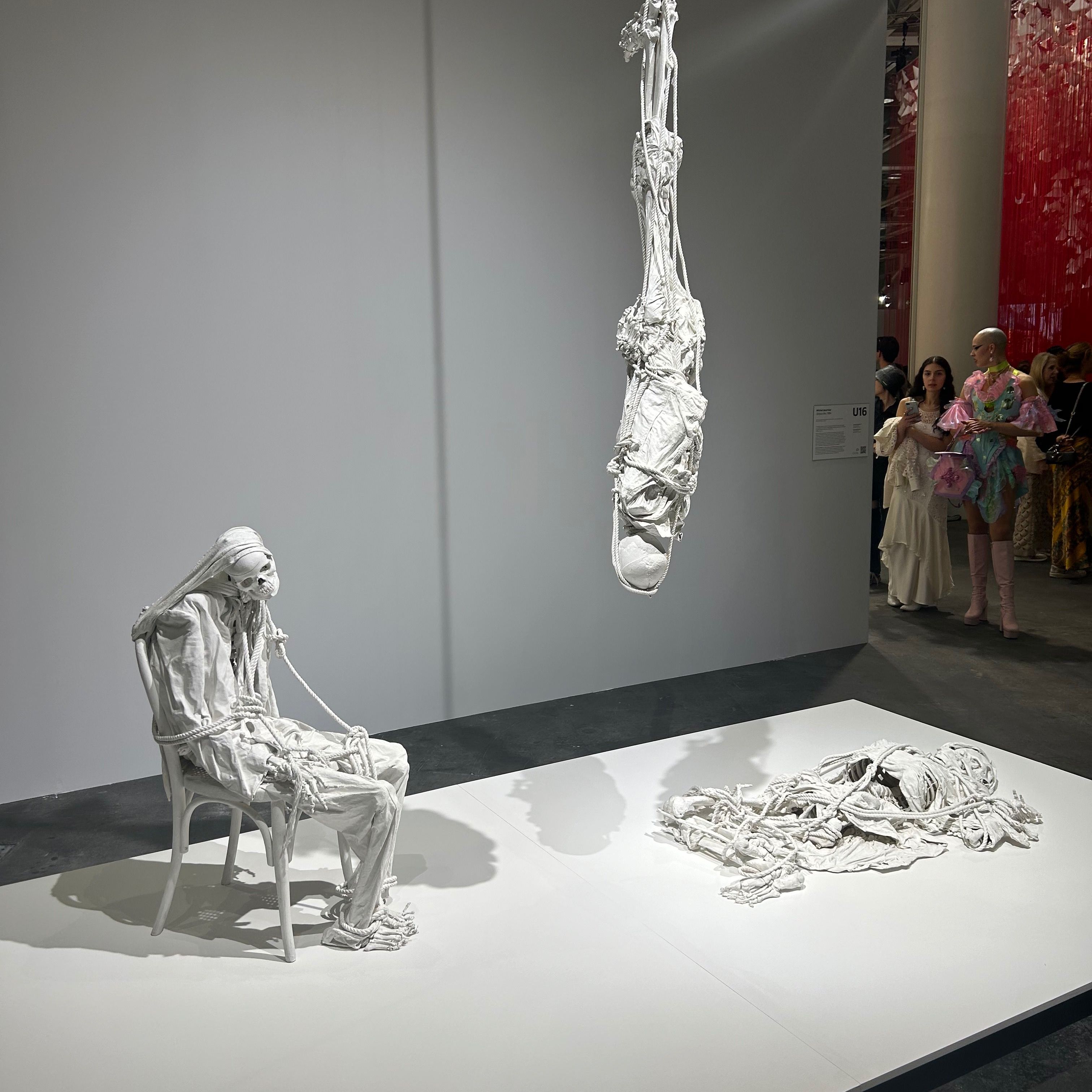
Michel Journiac questions normative social systems and their rituals, including religion, family, state, and morality. In the photomontage of Hommage à Freud (Homage to Freud), he turns the Oedipus myth upside down by featuring his own parents. In Oedipus Rex, three skeletons play out the drama: a father on the floor, a mother hanging, and a seated son are represented. The artist said, "The body is the site of all marks, all wounds, all traces. The body is inscribed with torture, the prohibitions of social classes, and the violence of the powerful." In this work, the various arrangements and states of the body express the violence of the family and even the social structure.
Michel Journiac (b. 1935, Paris; d. 1995, Paris) is a leading French artist who, along with the Viennese Actioniste and Gina Panet, is respected as a central figure in body art. Rebellion, radicalism, and destruction are represented in Jourgnac's work. His work is in the collections of some of the world's leading museums and is widely acclaimed.
The works introduced here are works that delve into their own political and cultural backgrounds while strongly communicating their message to the society in which we live. It is particularly impressive that the three artists introduced here express their struggles, their dealings with society, and their determination through large-scale works of art. When you see such works of art, you can feel firsthand their impact and the great influence that "artwork" has on changing people's consciousness.

