

By Ryusei2025.02.09 Update
Curiosity is a powerful driver, sparking new discoveries and enriching our lives in unexpected ways. It's a pure, potent force, capable of carrying us far, often before we even realize the distance we've traveled. She enjoys the journey, the detours, the serendipitous connections forged not through calculated strategies, but through genuine interest.
For the series dialogue: roots and fruits, ArtX delves into the minds of established and emerging collectors from Japan and abroad. Through intimate conversations, we uncover the roots that led them to collect artworks—their personal thoughts, experiences, and philosophies—as well as the collections to which these passions have borne fruit.
In our second interview, we spoke with Naoko Sasagawa, president of Queen Co., Ltd. Beyond her work as a collector, Sasagawa collaborates with artists and runs the hair care brand uruotte. We sat down with her at Nanzuka Taken, a bar immersed in the world of Hajime Sorayama, to explore her diverse experiences, from her first acquisition to collaboration with Sorayama and her approach to collecting.
In our second interview, we spoke with Naoko Sasagawa, president of Queen Co., Ltd. Beyond her work as a collector, Sasagawa collaborates with artists and runs the hair care brand uruotte. We sat down with her at Nanzuka Taken, a bar immersed in the world of Hajime Sorayama, to explore her diverse experiences, from her first acquisition to collaboration with Sorayama and her approach to collecting.
Q1.
The title is "dialogue: roots and fruits," and I would like to start by asking about the "roots." What kind of child were you in your childhood? Also, please tell us if you have any memories that have influenced your current collection.
The title is "dialogue: roots and fruits," and I would like to start by asking about the "roots." What kind of child were you in your childhood? Also, please tell us if you have any memories that have influenced your current collection.
Sasagawa: I was a quiet, dreamy child, happiest indoors with a book, a drawing pad, or music. Art was a natural part of my upbringing; my mother studied it, and my grandfather had his own atelier. Perhaps influenced by my mother's emphasis on individuality, I gravitated toward the minor things. While rock and pop dominated the music scene, I found myself in jazz clubs. And as college students flocked to tennis courts and ski slopes during the bubble period, I explored museums and galleries, often alone.
ArtX: That's when you encountered contemporary art.
Sasagawa: In other words, contemporary art is still a minor culture, both now and in the past. I think that's why I was attracted to it. I'm sure I'm attracted to things that other people aren't doing, things that are niche and minor. It's like a minor aesthetic. I think there's something interesting about things that people don't pay attention to because they don't understand them. I think that's how I became interested in contemporary art.
Q2.
When was the first time you felt a passion for art, and what was the first piece you collected?
When was the first time you felt a passion for art, and what was the first piece you collected?
Sasagawa: All of them have deep memories, but the first piece I collected was by a French artist named Claude Viallat. I was twenty, visiting a gallery with my mother when I stumbled upon it—the opening night of his exhibition. He is an artist who paints on everyday fabrics such as bed covers and tent cloths, not on canvas. Moreover, he endlessly draws a fixed, bean-like shape. I liked that infinity and the vivid colors reminiscent of Matisse. The gallery staff told me that I could fold it up and put it away, even though it was a very large piece. They told me that I could pay whenever I had the money, so I decided to collect it.
ArtX: Are there any works or artists that left a particularly strong impression on you at that time?
Sasagawa: The work that first truly captivated me was from Lee Ufan's "From Line" series. I was drawn to the minimal, sophisticated, almost oriental sense of space and time it evoked. Looking back, I realize this likely influenced my first purchase, a Claude Viallat piece. Unlike his typically vibrant works, this one featured gray bean shapes arranged on a dark blue cloth with white margins. It resonated with the serene beauty of a stone garden in Kyoto, conveying a sense of timelessness, a quality I also appreciate in minimal art. That connection is likely what drew me to it so strongly.
Q3.
What do you value most when you collect art? Of course, I think there is the fact that you like it, but for example, whether you try to buy something that is out of your strike zone, or whether you consider the future of the artist.
Sasagawa: I didn't start with a theme in the first place, and I've thought about having a theme along the way, but after all, artists and their styles change, don't they? So, it's very difficult for me to decide on a framework, such as collecting only female artists, so I gave up. So, in my case, I use the excuse that I like that kind of freedom, and in the end, I value the works and artists that touch my heartstrings at that time, and the encounters with people. However, my bad habit is that I collect things without thinking about the size too much, and then I have trouble storing them later. I don't have a big warehouse, and I'm having trouble with that.
What do you value most when you collect art? Of course, I think there is the fact that you like it, but for example, whether you try to buy something that is out of your strike zone, or whether you consider the future of the artist.
Sasagawa: I didn't start with a theme in the first place, and I've thought about having a theme along the way, but after all, artists and their styles change, don't they? So, it's very difficult for me to decide on a framework, such as collecting only female artists, so I gave up. So, in my case, I use the excuse that I like that kind of freedom, and in the end, I value the works and artists that touch my heartstrings at that time, and the encounters with people. However, my bad habit is that I collect things without thinking about the size too much, and then I have trouble storing them later. I don't have a big warehouse, and I'm having trouble with that.
ArtX: But that's a wonderful thing. You value the freedom of not having too many frameworks or themes, whether good or bad, and the once-in-a-lifetime encounters at that time, without being too restrictive.
Sasagawa: That's right. Myself, and people too. That's why I'm drawn to challenging mediums like video and bio art. I even acquired a bio art piece featuring Hatsune Miku's beating myocardial cells. I gravitate towards the unconventional, the "what is this?" pieces. It's a thrill to invest in something new and see where it leads. Just like in business, I take ownership of my decisions, and with collecting, that means embracing the interesting, the new, even the seemingly strange. I love the challenge of acquiring something I don't fully understand.
ArtX: You're a good fit for the field of contemporary art.
Sasagawa: That's right. And the best part is, there's always so much I don't understand. It's endless, so it never gets boring. Artists are constantly pushing boundaries, exploring ideas ahead of the rest of us. It's natural to feel a bit lost sometimes. I'm not trying to catch up; I trust that understanding will come later, sometimes years or even decades down the line. That's what makes it so exciting. The mystery, the anticipation—it's like jumping into the unknown. Everyone should experience that thrill.
Q4.
Do you feel that the works you were attracted to and collected at that time are still good from your current perspective?
Do you feel that the works you were attracted to and collected at that time are still good from your current perspective?
Sasagawa: I still appreciate many of the pieces I collected early on. In fact, sometimes I think my initial choices were even better. As you gain experience, market knowledge and other influences can become distractions. The temptation to acquire everything when you have some funds available can lead to regrettable purchases. I've learned that it's crucial to focus on what truly resonates with you. Those pieces that struck me as "good" from the heart have consistently proven to be so. Now, I'm more deliberate. Even if I love something at an exhibition, I wait. If it sells, it wasn't meant to be. Recently, a piece I'd previously passed on resurfaced a year later. The gallery staff told me it was the only unsold work, saying it had been "waiting for me." It felt like a true connection, and I knew I had to have it. That's the kind of piece I prioritize now – the ones that feel truly significant.
ArtX: in other words, you established a kind of internal compass for collecting.
Sasagawa: That's right, it must be within me without me knowing it. I can't really put it into words, but I prefer art that is both conceptual and visually beautiful, rather than just intellectual. That balance is essential.
Q5.
I think you've seen a lot of works. What do you pay attention to when you look at a piece?
I think you've seen a lot of works. What do you pay attention to when you look at a piece?
Sasagawa: "Seeing" is just the beginning. It's hard to immediately delve into deep analysis. First, I look for something that grabs my attention. Then, I seek out the perspectives of the gallerist and the artist. I want to understand their motivations. But ultimately, it comes down to the work itself. I'm fascinated by people, so I also value the relationships that develop with artists and others connected to the work. It's the whole experience—the art, the people, the conversations—that truly engages me.
ArtX: There are aspects of seeing intuitively and logically.
Sasagawa: Absolutely. My initial reaction—whether I love a piece, whether I want it—is intuitive. But then budget considerations kick in, and I start gathering information about the artist and the work. I want to balance that initial feeling with objective research. Through this process, I hope to refine my own internal compass. Some people are hesitant to buy, overly concerned with future value. But that approach misses the point. Don't let those anxieties hold you back. If you trust your instincts and take the plunge, you'll discover a whole new world of excitement.
ArtX: So, it is important to develop both of those aspects.
Sasagawa: Exactly. It's a principle that applies even to the management. Businesses today focus not just on numbers, but also on mission, vision, and values. What's important to you? What are you trying to achieve? These are essential questions. And as AI evolves and the nature of work changes, the concept of "playfulness" becomes increasingly important. A fulfilling life, I believe, involves integrating elements of play into our work. Perhaps collecting, too, is a form of play, a source of joy in life.
Q6.
Beyond collecting, you work with artists. Can you tell us more about those collaborations?
Beyond collecting, you work with artists. Can you tell us more about those collaborations?
Sasagawa: I run a hair care company, and in today's saturated market, product functionality is often similar across brands, leading to price wars. To stand out, we need to appeal to the five senses—sight, smell, and so on—and cultivate a compelling story, history, and worldview. I feel that this is similar to the process in which artists create their works.
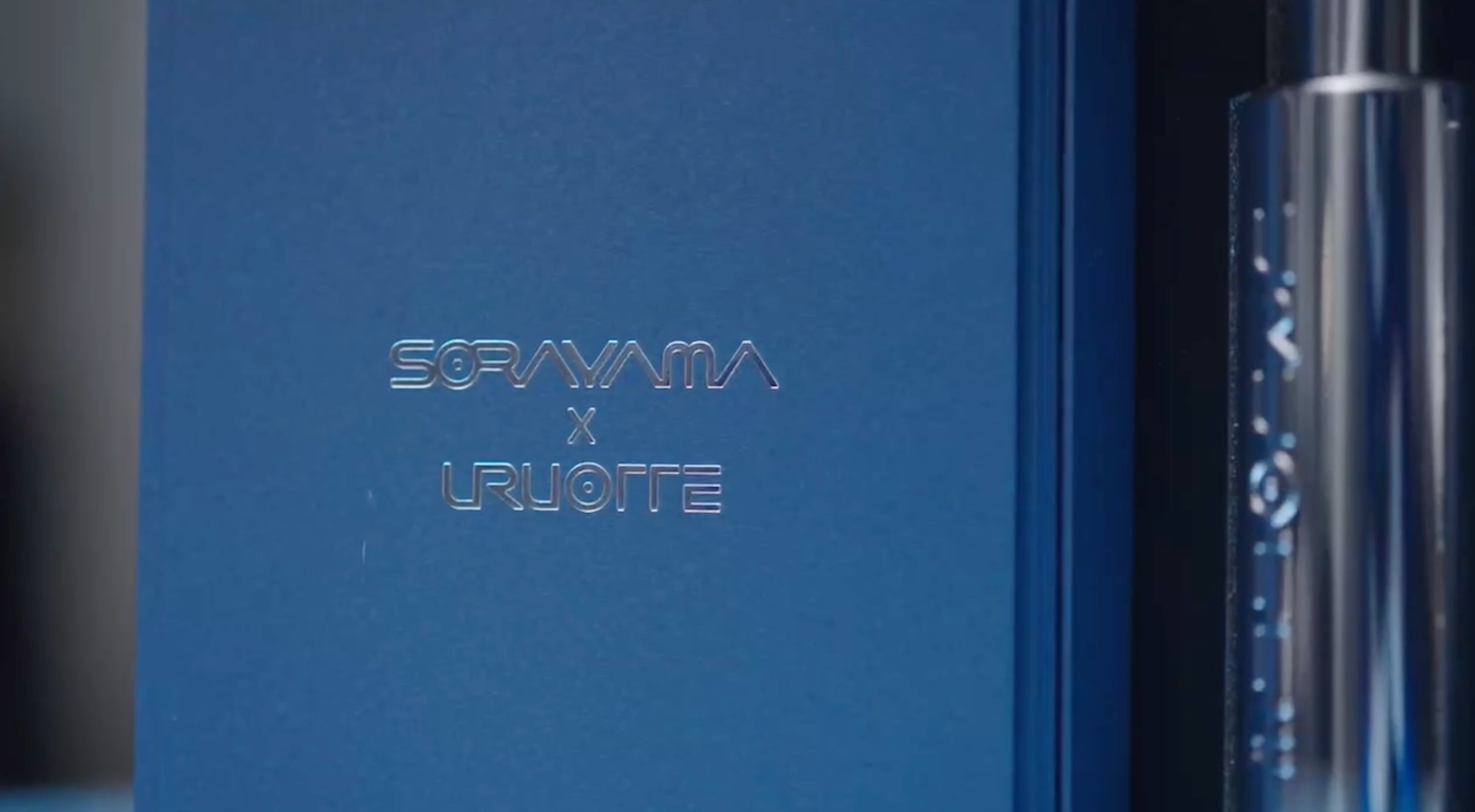
ArtX: The atmosphere in Nanzuka Taken is very unique, with all this Sorayama's work. Can you tell us about your collaboration with him?
Sasagawa: I connected with Mr. Sorayama through a gallery before his Dior Homme collaboration, which led to the opportunity to work with him. My concept was "Cosmic Journey Fragrance"—a fragrance that evokes a zero-gravity space trip through the scent diffused in the bathroom. We commissioned an architect to design a spaceship-like container and a perfumer to develop a "zero-gravity" fragrance. At the launch, we incorporated an AR installation by a media art team. The entire creative team, inspired by Mr. Sorayama's work, poured their energy into creating a truly unique and unparalleled experience, elevating the brand to a new dimension. Collaborating with artists inevitably leads to differentiation. It fosters a mindset of creating something truly unique. While I encourage other companies to do the same, it's crucial to respect the artist's vision and give them creative freedom. Restricting their ideas stifles their motivation. Successful collaborations require a company that embraces and enjoys the creative process alongside the artist.
Q7.
You're involved in many different areas beyond collecting. What's your vision for the future?
You're involved in many different areas beyond collecting. What's your vision for the future?
Sasagawa: I'm not someone who sets out with grand goals or missions. I've always followed my curiosity and embraced serendipity, and that's true of my collecting as well. My collection has evolved organically, shaped by my interests and chance encounters. Looking back, it reflects my personal journey. Art has enriched my life immeasurably, and I hope to continue this relationship at my own pace for as long as possible. I make it a point to visit exhibitions on weekends. Just recently, I caught the last day of a Tawan Wattuya show. Meeting him and hearing him discuss his beautiful watercolor technique was such a rewarding experience—like seeing a great film. I truly cherish those moments with art. So, my focus now is on staying healthy and maximizing the time I can spend immersed in the art world.
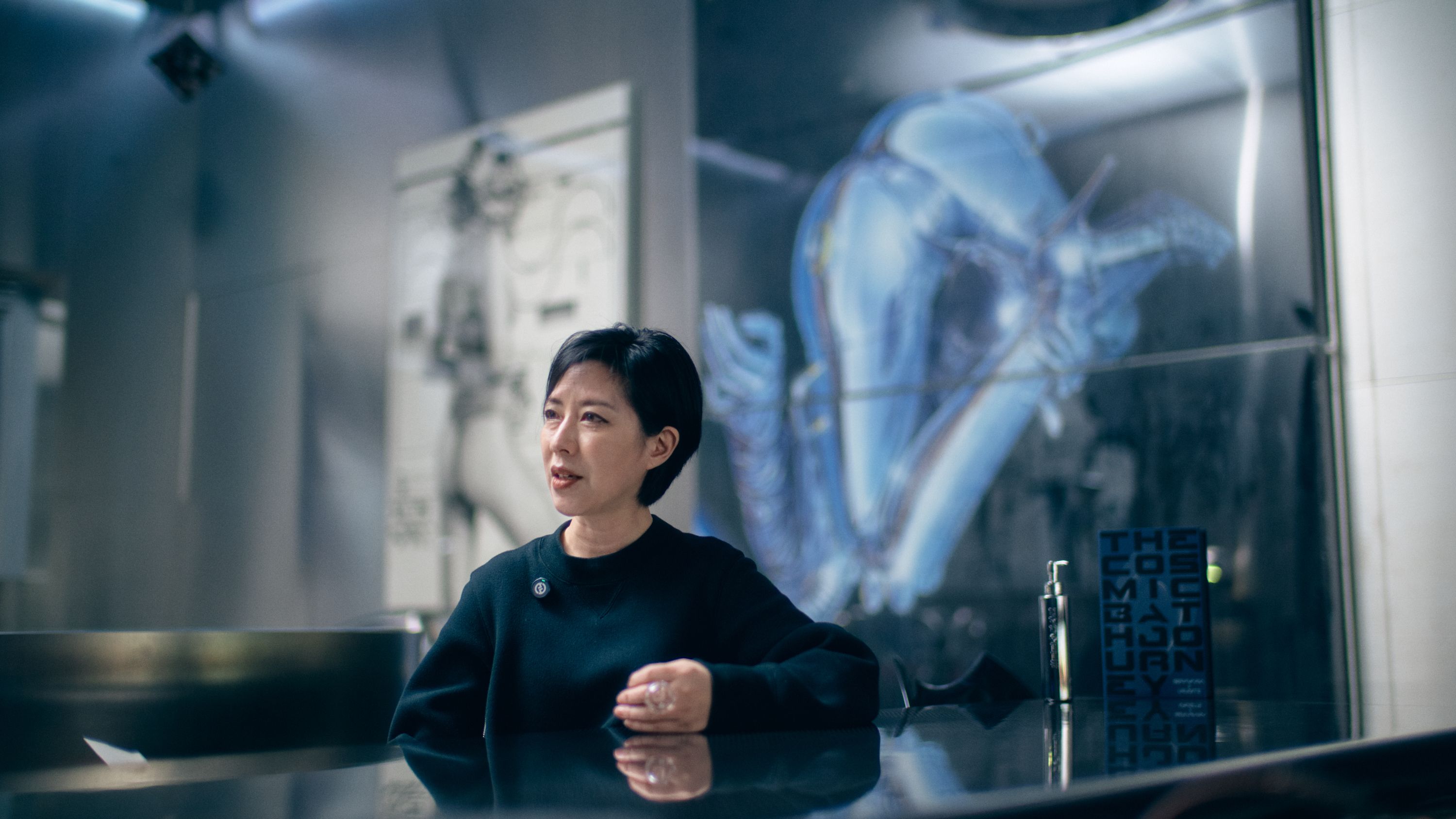
She collects with a pure heart, genuinely pursuing her interests without the constraints of pre-set themes or frameworks. She finds intrigue in the unfamiliar, embracing the unknown with an open mind and a sense of excitement. This attitude, it seems, has remained constant throughout her collecting journey.
While some collectors prefer structured approaches, focusing on specific themes or supporting particular artists, her method is more organic. Instead of overthinking art, perceiving it as a source of pleasure allows for more natural and meaningful encounters with works that resonate personally.
Curiosity is a powerful driver, sparking new discoveries and enriching our lives in unexpected ways. It's a pure, potent force, capable of carrying us far, often before we even realize the distance we've traveled. She enjoys the journey, the detours, the serendipitous connections forged not through calculated strategies, but through genuine interest. Artworks and individuals connect through this shared curiosity, creating a network of experiences that constantly opens up new paths.
A life lived alongside art, as her story demonstrates, is a rich and fulfilling one. Her modest demeanor and lively way of speaking are incredibly persuasive, conveying a genuine passion that speaks volumes. More than anything, her approach reminds us that the most meaningful encounters with art often come not from deliberate searching, but from an open heart and a curious spirit, allowing art to reveal itself in its own time and way.
---
Filmed at : Nazuka Taken
Hajime Sorayama's solo exhibition is scheduled to be held at the NANZUKA ART INSTITUTE in Shanghai from the end of February 2025.
Hajime Sorayama's solo exhibition is scheduled to be held at the NANZUKA ART INSTITUTE in Shanghai from the end of February 2025.

