In Conversation: The Watari Museum of Contemporary Art vol.1 Art, Society, Beuys and Paik
InterviewBy ArtXMagazine2023.10.10 Update
Since 1990, the Watari Museum of Contemporary Art has provided a unique perspective. The museum, founded by Shizuko Watari and centered around the Watari family, showcases cutting-edge artists from Japan and abroad and undertakes projects that go beyond the role of existing museums, covering architecture and philosophy. This time, we spoke with Koichi and Yu Watari about their experiences with the museum. The conversation was more of a casual chat among family members than a formal dialogue. We hope you enjoy this glimpse into the unique perspective of a family that has been at the forefront of contemporary art in Japan.
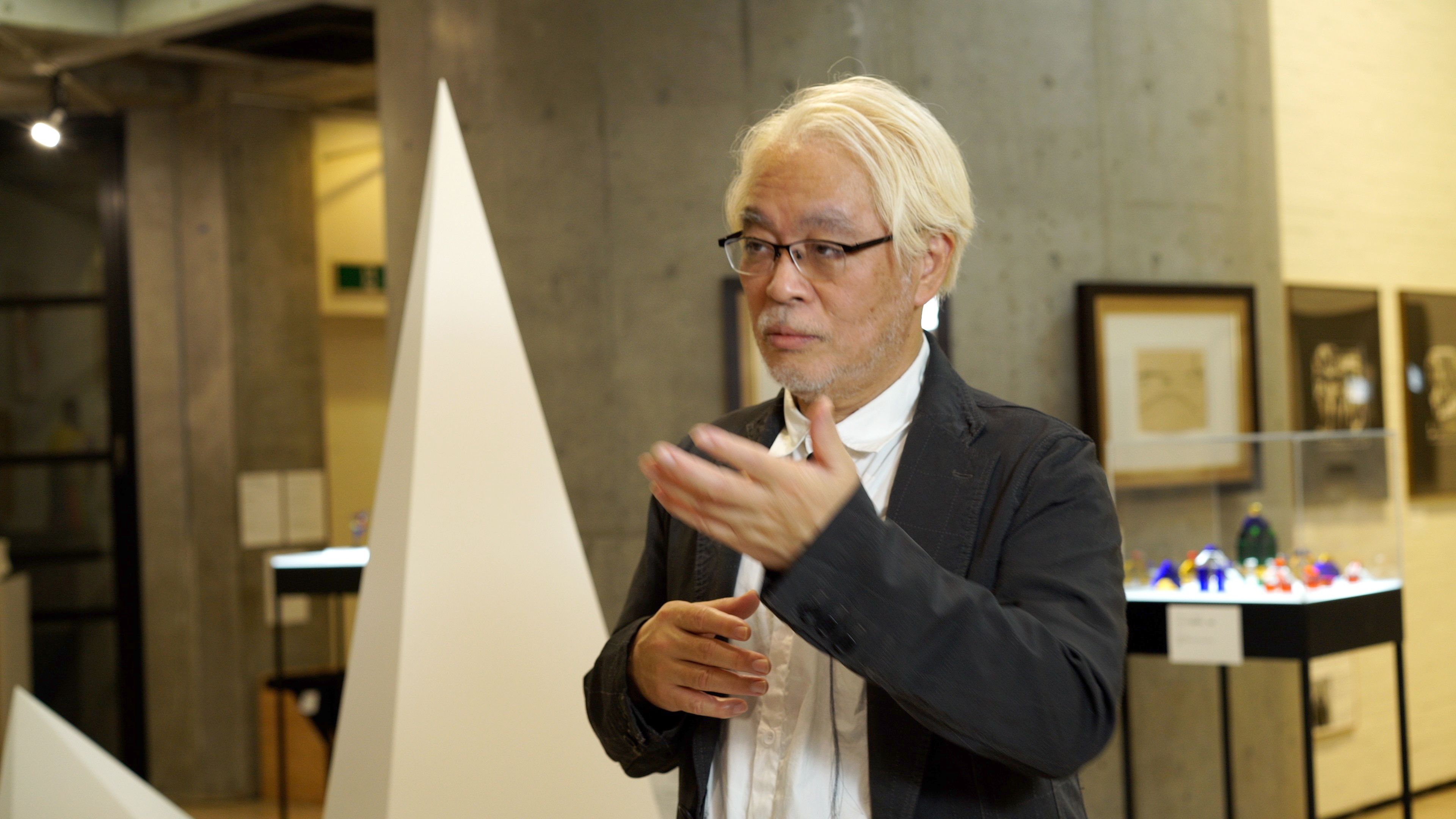
Koichi Watari
Born in 1960, graduated from the Department of Sociology, Waseda University, and has been the curator of the Watari-um Museum of Contemporary Art since 1992. He was the first Japanese person to be involved in the international contemporary art exhibition Documenta 9 in 1992. He is a curator of the Reborn Arts Festival.
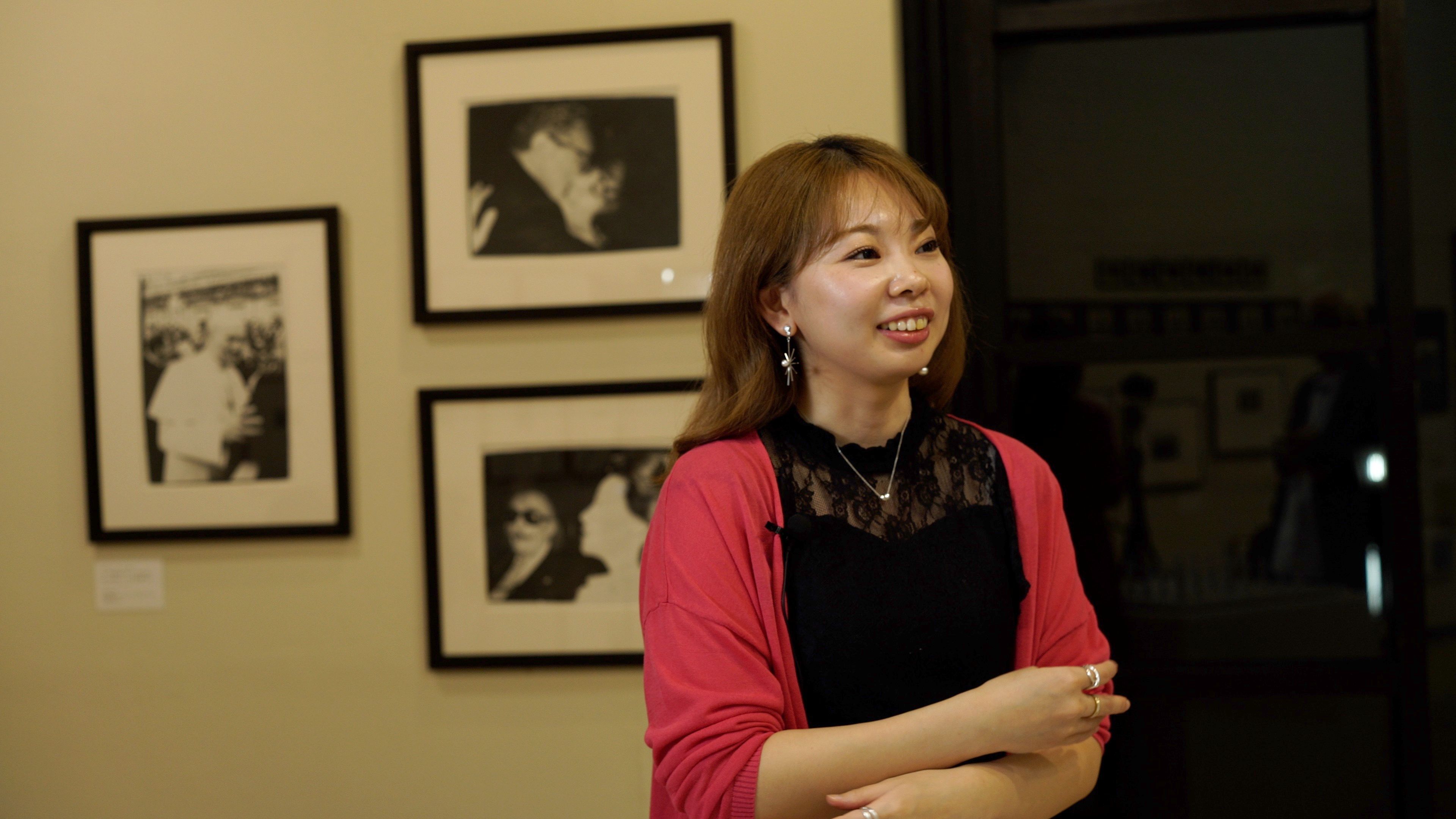
Yuu Watari
Born in 1994, she studied art history in New York before returning to Japan. Currently, she works at Sohen-Ryu Fushin-An, one of the leading Japanese tea ceremony houses. In 2022, she hosted a tea ceremony with the theme of "peace" at Tenryuji Temple in Kyoto. She used works by Yoko Ono and the Dalai Lama in the tea room as a bridge between contemporary art and traditional Japanese Tendo culture. Her plan is to showcase not only contemporary art, but also tea ceremony and other aspects of Japanese historical culture.
Father-daughter dialogues I. Art, Society, Beuys and Paik
“The Watari family's approach to contemporary art is to recognise that even the smallest details, such as the difference between the handshakes of Andy Warhol and Joseph Beuys, can lead to understanding the vast differences in their works. Although theoretical knowledge is important, it is equally vital to be able to think with your hands.”
Joseph Beuys: A German artist known for his diverse and innovative art activities, including sculpture, performance art, social activism, and the concept of "social sculpture".
Nam June Paik: An artist considered a pioneer in video art, who innovatively utilized technology to explore the intersection of art, technology, and popular culture.
Andy Warhol: A pioneer of pop art, he was an American artist who captured icons of popular culture and consumer society, known for his vivid screen prints and films.
Keith Haring was an American artist known for his vibrant colorful illustrations and pop-art style, incorporating social messages and political themes into his works, which made him widely recognized.
Yuu: It’s now been approximately 30 years since this museum first opened, totalling about 40 years in the contemporary art scene for you. With the ever-changing society, how would you say art is involved in all this?
Koichi: Initially, I regarded art as something remote, belonging only in art history. I assumed most contemporary art came from overseas, so when I would read foreign magazines, I felt like they depicted distant places on “the other side” of the river. After encountering Joseph Beuys and Nam June Paik in person, I realised that artists were real life people, integrated into society just as I was. It was during university that I first understood that contemporary art is closely related to society and are not separate entities.
Yuu: You just mentioned Joseph Beuys. What was your relationship like?
Since I was little, I've been hearing names like Warhol, Haring, and Beuys often at the museum. I know about the works we have, but I actually still have much to learn about their persons.
Caption: Joseph Beuys performing CONTINUITY, May 31st, 1984.
Koichi: Meeting an artist in person is really important. I've been friends with Nam June Paik since I was little, and I met Beuys through him. So my first impression was like, "Who's this weird man?"
Especially with Beuys, Paik was truly the key connector, and my sister and I learned a lot about contemporary art through him. It's an everyday reality now, but around the late 1970s and in the beginning of the 1980s, Paik would always joke about how there’ll come a time when TV will hang on people’s walls. We’d also hear him say things like “The Berlin Wall would disappear and east and west would become one”. Then suddenly in November 1989, the Berlin Wall came down. That's the interesting thing about contemporary art, it's like reading the future.
Much like Paik, Beuys also has this prophetic quality. He's known to be a bit difficult though.
He had several things he wanted to do, one of which was the environmental activism. For example, the planting of 7,000 oak trees in the city of Kassel.
He had several things he wanted to do, one of which was the environmental activism. For example, the planting of 7,000 oak trees in the city of Kassel.
Yuu: Ah, the one you thought of buying, but didn’t end up with.
Koichi: Yes. My one and only regret. To this day, I regret myself for not buying it, even when Paik asked me if I was going to, and that the seedlings were 100,000 yen each.
Yuu: Why didn’t you? You didn’t see value in the tree?
Koichi: I didn’t know what to do with a tree.
Actually, the work is a pairing of and basalt stone and the tree. So if you place them side by side, the tree grows in contrast with the stone that stays the same.
Some galleries in New York have like, three of those trees. Those belong to the people who bought them then. I have regret for myself for not getting them even when we were so close.
Anyway, my point was that Beuys was the first to bring environmental issues into art like he did. Another important thing Beuys advocated for in the 1980s was that in addition to democracy and socialism, we need to seek a third, alternative social structure. Even after 40 years, we haven't been able to come up with a solution. Beuys’ works are interesting to me, because all his works are based on this foundation.
Yuu: Since I was little, I’ve heard his name a lot while eating here and I’m reasonably acquainted with his philosophy, but I’ve never actually met him. What kind of person was he? How does he express them through his works?
Koichi: For example, there is a work of his where he stands in front of a Mammoth. In it, he writes “kunst = kapital” which means art equals the economy. Messages like this, not as direct, but are scattered inside his works and this is intriguing.
Art is something that can never truly provide answers. It simply poses questions. It presents things like "this is what exists" or "this is what could exist." Trying to find answers through art is often futile.
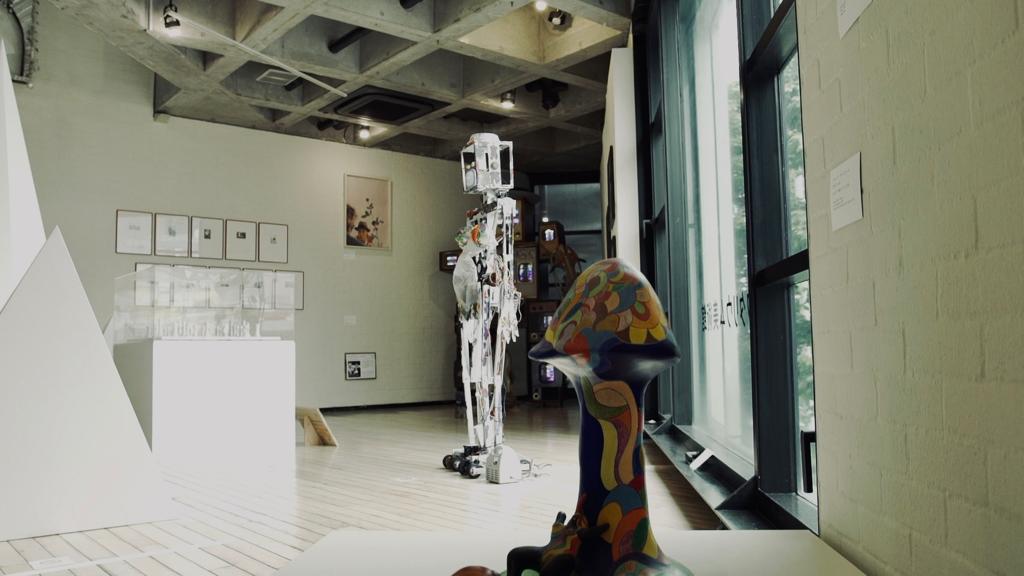
Caption: Installation work featured at the museum by Nam June Paik.
Yuu: So everyone looks at what he creates, and it encourages them to think about it.
Koichi: Oh yeah. When it comes to Beuys and Paik, I like to think about them in decade-long spans. I take what's thrown at me and try to incorporate it into my own thoughts, thinking, "Maybe this is what they were trying to express." It's like a puzzle, and that's what makes it interesting.
Shimabuku says that a contemporary artist is someone who creates mysteries. I also think posing these mysteries and questioning them is one form of contemporary art. That's why it's fun when the puzzle pieces fit together perfectly. As you continue to pursue that, you eventually begin to imagine what works mean as you view them.
Yuu: I don’t think I’m there yet!
Koichi: In 1984, Beuys was invited to the Seibu Art Museum and Pike to the Tokyo Metropolitan Art Museum. Both were bored and came to spend the nights here making works. One day, my sister Etsuko drove Beuys to Meiji Shrine. The instance he saw the trees, he could tell how old they were and if it was a man-made forest.
Contemporary art is something that can be experienced not just intellectually, but also viscerally. For us, we try to understand the artist through their handshakes, the conversations we share, the time we share at events.
The Watari family's approach to contemporary art is to recognise that even the smallest details, such as the difference between the handshakes of Andy Warhol and Joseph Beuys, can lead to understanding the vast differences in their works. Although theoretical knowledge is important, it is equally vital to be able to think with your hands. In art, I find this approach to be effective and interesting.
Caption: Museum director Koichi Watari in front of the iconic Motohiko Odani sculpture. Works in frame by Bruno Taut, Joel Peter Witkin, Diane Arbus.